You don't need a big crisis to realize something needs to change. A process of empowerment and personal growth for people who feel there is more in them, and finally want to let it out.

There's a job, a home, a routine that ticks along. No one around you thinks there's a problem, and maybe you can't really point to one thing that's missing either. And still there's a quiet feeling that won't go away.
Maybe you know exactly what you'd like to change, and you've been putting off the first step for a long time. Maybe you give to everyone - at work, at home, to the kids - and at the end of the day there's hardly any room left for yourself. And maybe you wake up in the morning feeling that life is happening to you, instead of you leading it.
Most people who come to this process are not people in crisis. They are fully functioning people who have reached a point where they ask themselves one simple question: Is this the life I wanted for myself?
Personal empowerment starts right there. The moment you stop taking the current situation for granted, and start looking at what really matters to you, what is stopping you, and how to create change that fits the person you are today.
Did you nod at least once? That's already a good sign, because recognition is always the first step. An intro call commits you to nothing.
Personal empowerment is an inner process in which a person takes back the wheel: recognizing their strengths, building a real sense of capability, learning to set boundaries and taking responsibility for the direction their life is heading.
In practice, the process rests on four principles:
And it's just as important to say what the process is not. Personal empowerment isn't about becoming someone else, and it isn't a collection of motivational quotes that lift you for two days and disappear. It isn't positive thinking that covers up what hurts, and it isn't a course that ends with a certificate and a binder left on the shelf. It is a personal, practical process, measured by one thing only: what has changed in the way you live day to day.
And if you're wondering about the difference between the terms - personal growth is the movement, and personal empowerment is the force that drives it. In other words, personal growth is the path to personal empowerment: every small step you manage to take differently gives you back a little more trust in yourself, and that trust is what makes the next step possible. In practice both happen in the same process, so there's little point in separating them.
We can know we need to set a boundary - and not set it. Know it's time to decide - and put it off again. Know a certain habit is hurting us - and go back to it tomorrow morning.
This happens because change doesn't happen on the level of logic alone. Behind the way we act are habits etched in over years, beliefs we absorbed from home and our surroundings, fear of failure and sometimes, surprisingly, fear of success, and a need for approval that dictates decisions without us noticing. Some of these patterns are so familiar to us that we no longer recognize them as a choice at all.
That's why in the process we don't settle for the question "what do you want to change". The more important question is what makes you keep doing exactly what you're doing today. That is the real starting point, and that's where tools from the world of NLP come in, tools that can identify the limiting belief and take it apart.
Sometimes the simple way to understand what we're looking for is to see the gap between the sentence we come into the process with, and the sentence we want to leave it with.
"I know what I want, but I don't do it"
I turn intentions into small steps I actually take
"I'm afraid of making the wrong choice"
I decide, and I stand behind my choice
"I always put myself last"
There's room for my needs too, without guilt
"I can't say no"
I set a boundary without apologizing for it
"I keep going back to the same pattern"
I recognize the autopilot and choose a different response
"I go with whatever life brings"
I choose where I'm going
Change doesn't happen in a day. It happens when you start recognizing the pattern in real time and practicing a different way - again and again, until it becomes natural.
Everyone has a different starting point, so no two processes are the same. These are the areas that come up most often in processes of empowerment and personal growth.
The voice that says "I'm not good enough" is a learned belief, and anything learned can be changed. We'll stop measuring you only through successes, failures or what others think, and build a self-worth that doesn't depend on outside approval.
Low Self-Confidence →You say yes when you want to say no, and pay for it in burnout and frustration. Setting boundaries is a learnable skill: we'll learn to ask without apologizing, to say no without guilt and to look after yourself at work, in the family and in your relationship.
Going back and forth on the same decision for weeks without moving? First we crack why this particular choice is so hard for you, and only then work on the decision itself. You come away with clarity, and with the confidence to stand behind what you chose.
The same reactions, the same choices, the same results - until the pattern is changed at the root. We'll identify the limiting beliefs that run you on autopilot, and build in their place habits that work for you, not against you.
"I want something different" isn't a goal, it's a feeling. We'll translate the general wish into precise goals and steps you can start taking this week, so that fulfillment stops being a wish and becomes a plan.
Feeling stuck in your career, your relationship or your routine is a sign that the old patterns no longer serve you. We'll understand what is holding you in place, set a clear goal and start moving - until real, steady movement takes hold.
Harsh self-criticism and perfectionism sound like striving for quality, but in practice they paralyze. We'll learn to recognize that voice in real time, turn it down, and replace it with a way of treating yourself that lets you act.
When everything is urgent, nothing is truly important. We'll map where your time and energy go, restore priorities that reflect what matters to you, and build a routine you can keep up over time.
This is one of the most common thoughts among people who come to this process, and it's completely understandable. You've read, you've thought, maybe you've even understood what the problem is. So why isn't it changing?
Because knowing what needs to be done, and managing to do it over time, are two completely different things. When we are inside our own patterns, it's almost impossible to see them from the outside. That isn't failure, it's simply the angle of view.
And notice something interesting: when it comes to our children, we look for the best teacher. When something happens to the car, we take it to a professional without a second thought. But when the difficulty touches our own lives - a choice, our confidence, feeling stuck - we expect ourselves to manage alone, and usually turn to friends rather than to someone whose profession this is.
Personal coaching doesn't replace your own abilities. It creates a space to pause the routine, look closely at what's happening, and above all turn understanding into action in real life.
After the army or studies, choosing a direction of their own without trying to please everyone
They've achieved things, and inside they feel something still doesn't add up
A breakup, a new job, kids who've grown up - and a chance to choose again
A new chapter in life, and this time they want to truly choose it rather than be dragged into it
Women's empowerment is a process of personal growth that allows women to strengthen their self-confidence, recognize their abilities and strengths and create change in the areas of life that matter to them. Many women juggle career, relationship, family and social expectations, and sometimes find it hard to make room for their own wishes and needs. An empowerment process for women helps identify limiting thought patterns, cope with self-criticism, learn to set boundaries and develop a sense of worth that doesn't depend on approval from those around them.
Through emotional and personal guidance that combines tools from the world of NLP, it's possible to work on strengthening a sense of capability, making decisions from a place of confidence and changing patterns that hold back progress. The goal isn't to become someone else, but to connect to strengths that already exist and learn to express them in everyday life.
Men's empowerment is a process of personal and emotional growth that helps men know themselves deeply, strengthen their self-confidence and find a balance between social expectations and their own wishes and needs. Many men feel pressure to succeed, to show control and to be strong in every situation, even when they are dealing with difficulties in their relationship, at work or in their personal lives. A men's empowerment process makes it possible to re-examine limiting ideas about masculinity, develop the ability to express emotions, set boundaries and build healthier, more satisfying relationships.
In personal coaching that combines tools from the world of NLP, it's possible to identify behavior patterns that hold back progress, work on strengthening self-worth and develop assertive communication and confidence in making decisions. The goal is to allow every man to define for himself what masculinity means to him, to act from choice rather than outside pressure, and to create a life that fits his values and aspirations.
This question comes up in almost every intro call, and rightly so - the two terms get mixed up in the market and it isn't always clear what you're getting.
Personal development coaching mostly looks ahead: you define a goal, build an action plan and move toward it. Emotional therapy for personal empowerment also goes into what lies beneath the surface: the experiences, beliefs and fears that created the pattern in the first place.
With Alon Shemesh, these aren't two separate tracks. He is both an emotional therapist for personal empowerment and a personal development coach, a graduate of the Tut Tikshoret school and a certified NLP Master, and the process moves between the two approaches according to what each session calls for: sometimes you need a practical tool for the coming week, and sometimes you need to step back and understand where the difficulty came from in the first place.
What the two approaches share is that the responsibility stays with you. No coach and no therapist will change your life for you - they can help you see what's holding you back and give you tools to move. If you'd like to see the wider range of areas, you can go to the Personal Coaching page or get to know my path on the About page.
The process starts with mapping: what is bothering you today, what you have already tried and which pattern keeps repeating. From there we define where you want to get to, and work in one-on-one sessions that combine emotional work, tools from the world of NLP and changing habits. Between sessions you practice in real life, so that understanding turns into the way you live and doesn't stay in the room.
For anyone who feels they are functioning but not really leading: finding it hard to make decisions, saying yes when they want to say no, starting things and not following through, or simply reaching the point of asking whether this is the life they wanted for themselves. The process is suitable for men and women aged 21 and up, and most of the people who reach out are in their 30s and 40s.
Personal development coaching mostly looks ahead: a goal, an action plan and progress toward it. Emotional therapy also goes into what lies beneath the surface, the experiences and beliefs that created the pattern in the first place. Alon Shemesh is both an emotional therapist and a personal development coach, and the process moves between the two approaches according to what each session calls for.
No. Some people know exactly what they want to change, and some only know that the current situation no longer fits them. Creating that clarity is itself a legitimate part of the process, and sometimes the most important part.
It varies from person to person and depends on the starting point and the goal. Usually the first sense of movement comes within the first few sessions, because that's already where we begin to identify the pattern. Change that lasts over time takes practice, so in the intro call we set realistic expectations together, with no pressure and no commitment.
Yes, and in fact many of the people who reach out come from exactly that place. You don't have to be in crisis to want to grow. Sometimes the wish is to strengthen confidence, set better boundaries or move forward in an area that has been on hold for a long time.
Check two things: training and fit. For training, ask where they studied and what certification they hold. For fit, there is no substitute for an intro call. A personal empowerment process relies on trust, and if you aren't comfortable talking to the person in front of you, no method will work. That is exactly why an intro call with Alon comes with no commitment.
Yes. Sessions take place at the clinic at 51 Dubnov St. in Rehovot, and those who live far away meet on Zoom with the same depth. Many processes combine the two, depending on what works with your schedule.
Sometimes people wait for the moment when everything will be clear. When they'll know exactly which decision to make, what to change and who they want to be.
But clarity doesn't always come before you start moving. Often it forms along the way.
If you feel it's time to pause for a moment, understand what you really want and look at what is keeping you from getting there - you can start with one conversation.
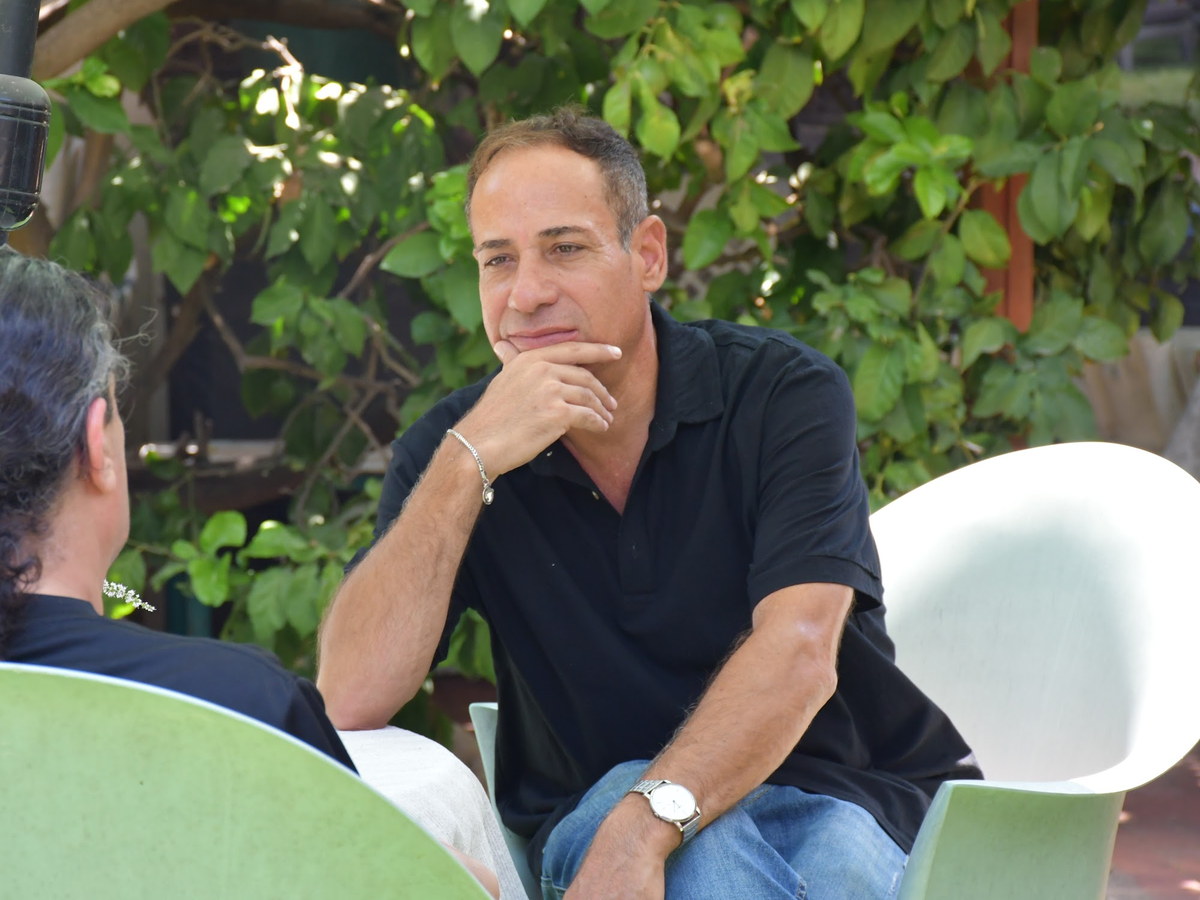
Alon Shemesh, emotional therapist and personal development coach, a graduate of the Tut Tikshoret school and holder of an NLP Master certificate. Sessions take place at the Nefeshlava clinic in Rehovot or on Zoom from anywhere in the country, at a pace that suits you.
Every process is built around what you bring into the room, not around a ready-made template. The first step is a short intro call, with no commitment.
Get to know meYou don't need to decide now what life will look like a year from now. You can start with one question: what would you like to feel different? A personal intro call, with no commitment.
To be clear: the guidance and emotional therapy offered by Alon Shemesh are not a substitute for psychological or psychiatric treatment. Alon is not a psychologist or a psychiatrist, and some situations require diagnosis or treatment by a mental health professional - in such cases you will be referred to the appropriate professional.
Before you go - have you heard about the December 1 seminar?
Alon will get back to you soon to confirm your place and share payment details. If it's urgent, you can also WhatsApp 054-3333265.