Some decisions drag on for weeks, and others we make and instantly regret. Decision-making coaching helps you understand what is really holding you back, and build a way of choosing you can rely on.

There's one decision that has been following you around for a while. It comes up on the way to work, before you fall asleep, every time someone asks "So, what did you decide?" You weigh it, go back and forth, put it off, and end up back where you started.
Putting off a decision feels safer than making the wrong choice, but it comes at a price. Endless deliberation drains your energy, gives you no rest, and slowly wears down your confidence that you can trust yourself at all. And in the meantime, when we don't choose, circumstances or someone else usually choose for us.
Most people who come to this process are not people who don't know how to think. They are smart, capable people who, precisely because of that, see every side, every risk and every option, and that's exactly where they get stuck.
Decision-making coaching doesn't hand you the right answer from the outside. It helps you reach it yourself, with clarity about what matters to you and what is really holding you back, and with the confidence to stand behind your choice.
Did you nod along at least once? That's already a good sign, because recognizing the pattern is the first step. An intro call comes with no commitment at all.
If decision making were only a matter of logic, we would draw up a list of pros and cons and be done. But we all know it doesn't work that way. The decision gets stuck because entirely different forces are at work beneath the surface.
These are the things that usually hold a decision back:
There is also an important difference between a hard decision and a complex decision. A complex decision involves a lot of information that needs to be organized and weighed, and it is solved with a method. A hard decision is one where the facts are clear, but something emotional won't let you choose. Most people who come to the process aren't stuck because of a lack of information, but because of what that information stirs up in them. So in the process we don't settle for asking "which is better"; we first ask what keeps you from deciding.
In psychology this is called locus of control, and it's one of the most important questions when it comes to decision making. It looks at how much you feel your life depends on you, as opposed to circumstances, luck and other people.
A person with an external locus of control feels that things simply happen to them. The big decisions are dictated by the situation, by other people's expectations or by however things turned out, so choosing is hard for them too, because deep down they don't really believe their choice carries weight. A person with an internal locus of control knows there is a connection between how they act and the life they live. They don't control everything that happens, but they are responsible for their response and their direction.
A central part of the process is shifting the locus of control inward. Not to load you with blame for everything that has happened, but to give you back the sense that the steering wheel of your life is in your hands, and that you are allowed to choose.
No single formula fits every decision, but there is an organized way to work. These are the main tools used in the process, adapted to what you bring.
Before weighing options, we look at what truly matters to you. Once the values guiding you are clear, many decisions that seemed complicated become clearer, because you have a compass to check every alternative against.
Tunnel vision that sees only two paths is a common trap. We lay all the options out on the table, even ones that seem unrealistic, and weigh each one against its benefits, its costs and how well it fits you.
A good decision isn't born from a spreadsheet alone, nor from a gut feeling alone. We learn to separate the two, listen to each one on its own, and then bring them together into a whole choice you can rely on.
Often what's stuck isn't the decision but the fear of getting it wrong. We identify the fear, examine what would really happen in the worst-case scenario, and turn it from a paralyzing obstacle into a bridge you can cross.
Intuition is a powerful tool, but it is most accurate when you are calm and connected. We learn to tell a genuine inner voice apart from fear or pressure disguised as one, and to trust yourself without dismissing logic.
Sometimes the answer sits in a place that's hard to reach with words. Inspiration cards and guided imagery, central tools in the work, bypass the noise in your head and let you see the choice from a new angle.
Sometimes the simplest way to understand what you're looking for is to see the gap between the sentence you come into the process with and the sentence you want to leave it with.
"I've been deliberating for weeks and can't decide"
I reach a decision in a reasonable time, and stick with it
"I'm so afraid of choosing wrong"
I choose, and I know I can cope even if it doesn't turn out perfect
"I ask everyone and get even more confused"
I listen to others, but the decision stays mine
"After I decide, I regret it and check again"
I stand behind my choice without checking it all the time
"Too many options just paralyze me"
I know how to filter and choose what suits me
"I go along with whatever others decide for me"
I take the wheel and choose the direction
Change doesn't happen in a day. It happens when you start recognizing what holds you back in real time, and practice a different way of choosing, again and again, until it becomes natural.
It's a very common thought, and a very reasonable one. You've already asked for advice, read up, made lists. So why is it still stuck?
Because when we are inside the dilemma, it's almost impossible to see it from the outside. When the question is stressful and we are alone with it, we tend to cut corners, avoid the painful answer, and return to the same inner conversation in different versions. It isn't a lack of ability, it's simply the angle of view.
And notice something interesting: when we need to make a big professional decision at work, we consult an expert without a second thought. But when the decision concerns our own life, we expect ourselves to manage alone, and usually turn to friends rather than to someone for whom this is their profession.
Personal coaching doesn't decide for you. It creates a place to pause, ask the right questions, and turn endless deliberation into a choice you stand behind.
Facing a choice of study track, career, relationship or where to live
To stay or to leave, to go freelance, expand a business or take a new risk
A breakup, a move, children who have grown up, and suddenly you need to choose a new direction
Anyone who wears themselves out with deliberation and wants to learn to choose calmly
It depends on the decision and on what lies behind it. Some dilemmas are resolved in a few focused sessions, because once you understand what is really holding you back, the choice becomes clear almost by itself. A recurring difficulty that comes with nearly every decision takes a little longer. In the intro call we define together what to expect, with no commitment.
Yes. Ongoing difficulty making decisions is almost always a learned pattern, not a fixed trait. Behind it there is usually a fear of making a mistake, a need for complete control or an inner voice demanding a certainty that doesn't exist. That pattern can be identified and taken apart, and in its place you can build a clear way of deciding that you can rely on.
Your friends love you, so they will usually tell you what is easiest to hear, or what they would choose for themselves. In a professional process, nobody makes the decision for you, and nobody lets it slide when you cut corners. The questions are designed to uncover what truly matters to you, including the parts that aren't always comfortable to admit, and that is exactly what opens the decision up.
First we look at why this particular decision is stuck: what the fear is, which belief is at work beneath the surface, and whether you are choosing out of desire or out of a need to please. Only then do we turn to the decision itself, map out all the options, separate logic from emotion and weigh each alternative against your values. Along the way we bring in tools from the world of NLP, inspiration cards and guided imagery, which help reach what is hard to put into words.
A very close one. When we don't trust ourselves, every decision becomes a test we might fail, so it's easier to put it off. As self-confidence grows, so does the ability to choose and stand behind the choice without checking again and again whether you got it wrong. That's why a decision-making process is almost always a process of building self-confidence too.
Absolutely. Many of the dilemmas people bring to the process are professional: whether to leave a job, go freelance, expand a business, go back to school or take on a new role. The tools are the same; only the content is different. Here too, the first question is not what pays off best, but what fits the person you want to be.
Locus of control is the degree to which we feel our life depends on us, as opposed to circumstances, luck and other people. Someone with an internal locus of control believes their choices carry weight, so it's easier for them to decide and act. Part of the process is bringing the locus of control back inside, so you feel the steering wheel of your life is in your hands again.
Both. Sessions take place at the clinic at 51 Dubnov St. in Rehovot, and those who live far away meet on Zoom with exactly the same depth. You can also combine the two, depending on what works with your schedule.
Many times we wait for the moment when we'll know for certain what the right thing is. But complete certainty almost never arrives before the decision, and sometimes it is actually created after it, along the way.
The goal of the process is not to guarantee you'll never make a mistake. It's to help you choose with clarity about what matters to you, and to develop the confidence that even if something doesn't go as planned, you have the tools to cope and choose again.
If there's a decision that has been dragging on for a while, you can start with a single conversation, and understand together what is really holding you back and how to get unstuck.
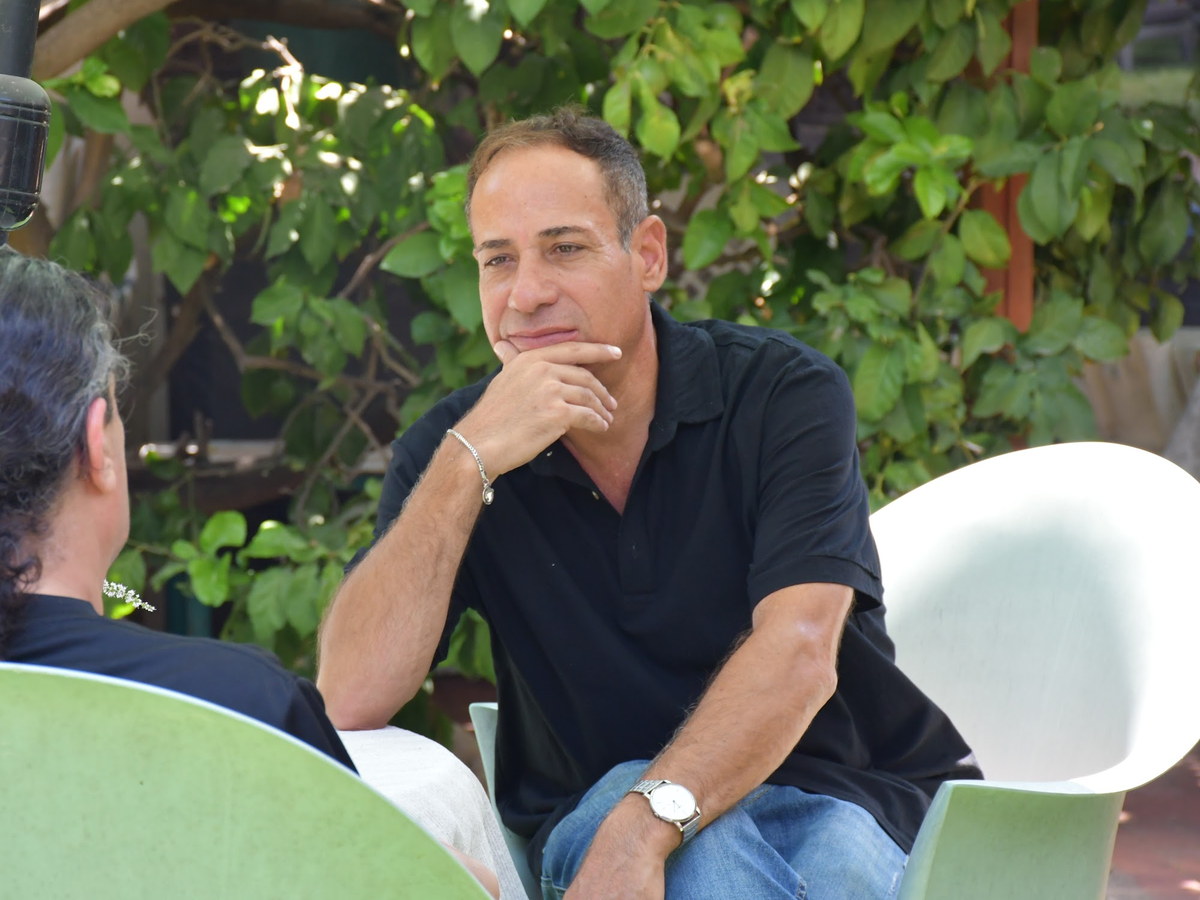
Alon Shemesh is an emotional therapist and personal development coach, a graduate of the Tut Tikshoret school and holder of an NLP Master certificate. Sessions take place at the clinic in Rehovot or on Zoom from anywhere, at a pace that suits you.
Every process is built around what you bring into the room, not around a ready-made template. The first step is a short intro call, with no commitment.
Get to know meYou don't need to come with an answer. You can start with the question: which decision is stuck, and what would you like to feel different? A personal intro call, with no commitment.
To be clear: the guidance and emotional therapy offered by Alon Shemesh are not a substitute for psychological or psychiatric treatment. Alon is not a psychologist or a psychiatrist, and some situations require diagnosis or treatment by a mental health professional - in such cases you will be referred to the appropriate professional.
Before you go - have you heard about the December 1 seminar?
Alon will get back to you soon to confirm your place and share payment details. If it's urgent, you can also WhatsApp 054-3333265.