Not every relationship that begins with love stays a safe place. Sometimes, without noticing, the relationship becomes a source of tension, criticism, fear and guilt. You find yourself giving up on what you want, living on constant alert, weighing every word and trying again and again to prevent the next confrontation.

If you are experiencing abuse (emotional, verbal or physical), threats, coercive control or fear of how your partner will react, joint couples therapy is not the right starting point, and your safety comes first.
You can reach out for professional, confidential help at any hour:
Toxic relationship therapy does not begin with trying to change your partner. It begins by focusing on you: understanding the reality you are living in, identifying patterns of emotional harm, strengthening your self-confidence and restoring your ability to choose what is right for you.
With Alon Shemesh, an NLP practitioner and personal development coach, the process focuses mainly on the person who has been hurt in the relationship. The goal is not to convince you to stay or to leave, but to help you identify harmful patterns, understand your needs and make decisions from awareness, confidence and personal strength.
A toxic relationship is one in which, over time, there are patterns that harm the emotional well-being, self-confidence or sense of freedom of one of the partners. In some cases the relationship can become destructive, involving emotional manipulation, humiliation, control and ongoing psychological harm.
It's important to understand that not every argument, crisis or period of distance points to a toxic relationship. Healthy relationships have disagreements, disappointments and difficulties too. The key difference lies in how they are handled.
In a healthy relationship you can express an opinion, set boundaries and feel there is room for the wants and needs of both partners. In a toxic relationship, by contrast, a reality may develop in which one partner fears the other's reaction, feels guilty all the time or gradually loses confidence in themselves.
An abusive relationship can be hard to recognize precisely because the change happens gradually. Behaviors that once would have met resistance become part of the routine, and the person being hurt starts getting used to them. It's important to look not only at your partner's behavior, but also at the feelings that develop in you within the relationship.
Hurtful remarks, contempt, humiliation in front of others and a feeling that nothing you do is ever good enough.
Hesitating to voice an opinion, share feelings or make decisions for fear of your partner's reaction.
Attempts to limit your social connections, monitor your personal conduct or control your decisions.
Using guilt, threats or promises to get you to give up your personal needs.
Repeatedly denying events, dismissing your feelings or trying to make you doubt your memory and judgment - a pattern known as gaslighting.
A feeling that you no longer recognize the person you were before the relationship, along with a decline in your sense of capability and self-worth.
Periods of hurt and distance followed by reconciliation, promises to change and moments of closeness, until the harmful pattern returns.
A single sign does not necessarily mean a relationship is toxic. However, when there is a recurring pattern of emotional or psychological harm, it's important to take it seriously and not wait until the situation gets worse.
The difficulty of leaving a bad relationship does not necessarily come from being unaware of the harm. Sometimes a person understands perfectly well that something is wrong, yet struggles to take the next step.
There are many reasons for this: love that is still there, hope that things will change, emotional or financial dependence, shared children, fear of loneliness and sometimes fear of how the partner will react.
One of the factors that can make the decision harder is the cycle of reconciliation and pain. Periods of criticism, humiliation or hurtful behavior alternate with apologies, gestures of love and promises that things will change. The good moments raise hope that the relationship will go back to how it was at the start, but when the hurtful behavior returns, the person being hurt finds themselves back in the same cycle.
Over time, emotional and psychological harm can undermine self-confidence and make decisions harder. That is why therapy for a toxic relationship does not focus only on whether to break up, but also on understanding what makes the decision difficult and on strengthening your ability to act from personal choice.
Unlike ordinary couples therapy, where both partners come with a shared wish to improve the relationship, in a toxic relationship the situation is sometimes completely different. In many cases the hurtful partner does not acknowledge their behavior, downplays how serious the harm is or is not willing to take part in a process of change.
In that situation, trying to change your partner can become yet another cycle of frustration and disappointment. Individual therapy lets you focus on what is within your control, even when the other side does not cooperate. The work with Alon Shemesh focuses on several key areas:
The first stage is understanding what is really happening in the relationship: identifying situations of control, blame, emotional manipulation, people-pleasing or self-erasure, and telling the difference between an ordinary relationship difficulty and behavior that hurts you. Sometimes simply understanding that this is a recurring pattern, and not a one-time event, makes it possible to start seeing the relationship more clearly.
When a person experiences criticism, humiliation or belittling over a long period, they may start to believe the things said about them. The process is designed to help them reconnect with their strengths, wants and personal abilities, and regain a sense of capability and confidence. Work on personal empowerment can be a meaningful part of coping with emotional harm and of the path to rebuilding self-worth.
A significant part of the work is learning to recognize what suits you, what hurts you and which behaviors you are not willing to accept. Setting boundaries is not an attempt to control the other person, but a way to respect yourself and protect your personal needs. It's important to stress that in situations of threats, violence or coercive control, setting boundaries on your own can increase the risk, and dedicated professional support and safety planning are needed.
At the start of the process it isn't always possible to know whether it's right to stay in the relationship or end it. The personal work lets you explore your options, understand what is holding you back and make decisions that fit your needs and your reality, without acting only out of fear or guilt. When there is difficulty making decisions, especially after a long period of damaged self-confidence, a personal process can help restore trust in your own judgment.
Not every toxic relationship has to end in a breakup, but not every relationship can or should be repaired either.
When the issue is unhealthy communication patterns, with no violence, fear or coercion, and both partners acknowledge the problem and are willing to take responsibility for their behavior, it is possible to explore the option of change. However, when one side keeps hurting, denies the behavior or puts the responsibility on the other, the hurt partner cannot be expected to fix the relationship alone.
With Alon Shemesh, the process is not based on the assumption that every relationship must be saved. Sometimes the work leads to an understanding that change is possible, and sometimes it helps you recognize that continuing the relationship is not right or safe for you. When there are patterns of violence, threats or coercive control, joint couples therapy may be unsuitable and even dangerous, and you should turn to a professional who specializes in domestic violence.
Coping with a destructive relationship does not have to start with a dramatic decision. Sometimes the first step is simply acknowledging that something in the relationship is not good for you.
When there are threats, violence or fear of your partner's reaction, it's important not to take steps toward separation or confrontation without consulting a professional who specializes in domestic violence.
At Nefeshlava, Alon Shemesh offers personal emotional guidance to people coping with difficulties and crises in their relationships. The process begins with an intro call in which you can share what is happening in the relationship, the feelings that come up and the questions on your mind.
Later on, and as needed, the work may combine tools from NLP, personal coaching and emotional work, with the aim of identifying patterns, strengthening self-worth and developing the ability to make independent choices. Your partner does not need to attend sessions or agree to take part in the process. Sessions take place at the clinic in Rehovot or on Zoom, depending on suitability and need.
Absolutely. In many cases the work is done with the partner who has been hurt in the relationship, even when the other partner is not interested in taking part. The process focuses on personal strengthening, identifying harmful patterns and exploring the options for what comes next.
In an ordinary relationship crisis there may be disagreements and difficulties, but mutual respect and the ability to listen are still there. When there is ongoing fear, humiliation, control, manipulation or emotional harm, it may be an abusive dynamic that calls for professional attention.
No. The goal of the process is not to steer you in advance toward leaving or staying, but to help you understand the situation, recognize your needs and explore your options with awareness and confidence. When there is danger, safety comes before the question of repairing the relationship.
The difficulty of leaving a bad relationship can stem from emotional dependence, fear of loneliness, hope for change, family ties or financial dependence. A cycle of reconciliation and pain, in which periods of hurt alternate with moments of closeness and promises to change, can also make it harder to reach a decision.
There is no way to guarantee change in a person who does not acknowledge their behavior or is not willing to take responsibility. The personal work focuses on what can be changed in your life and on your ability to recognize harm, protect yourself and make independent decisions.
The length of the process varies with your personal situation, the depth of the difficulty and the goals of the work. There is no fixed number of sessions, and progress is reviewed according to your needs and the changes that take place along the way.
You don't have to keep living in a cycle of fights, hurt and uncertainty. And you don't have to decide right now whether to stay or leave. You can start with one conversation, in which you begin to understand what is happening in the relationship and explore the possibilities for change.
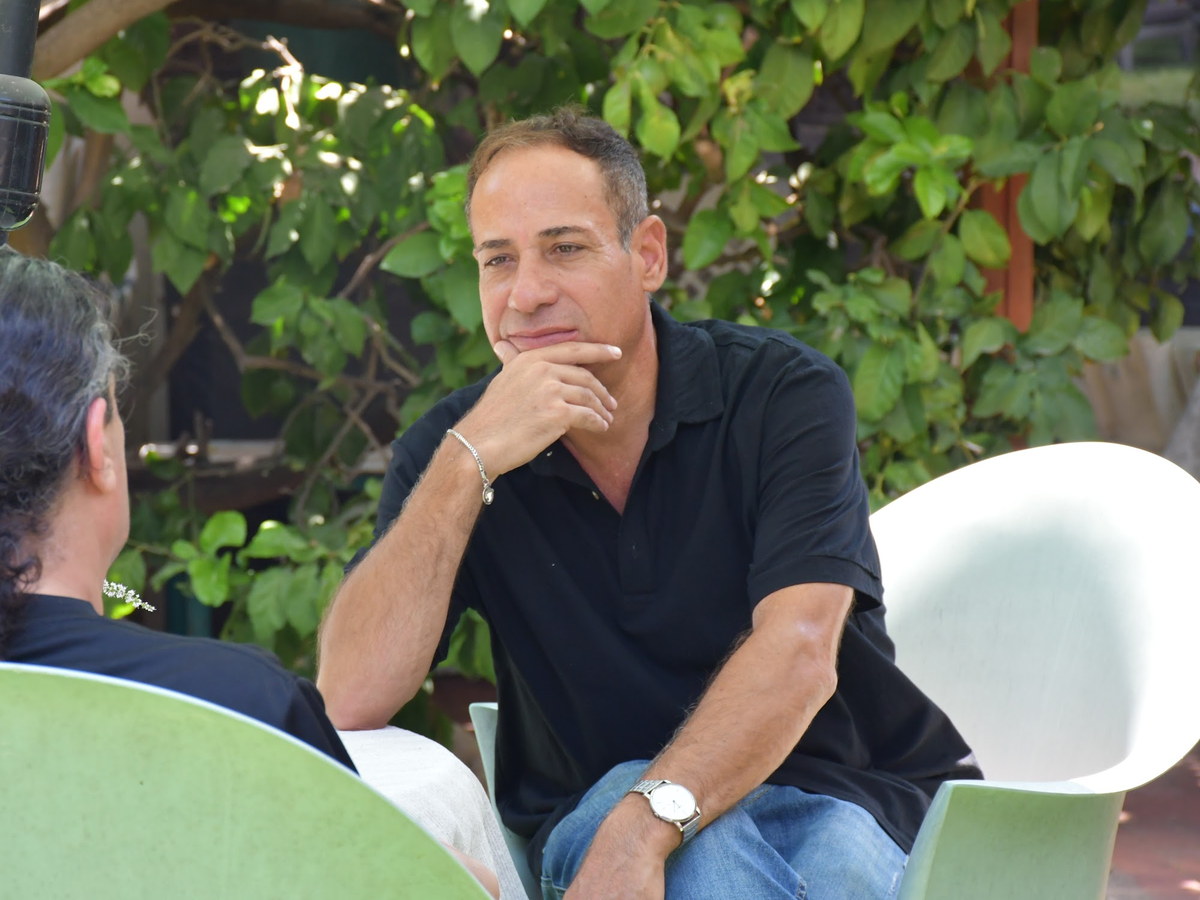
Alon Shemesh, an emotional therapist and personal development coach, holder of an NLP Master certificate and a graduate of the Tut Tikshoret school. Sessions take place at the clinic in Rehovot or on Zoom, depending on fit and need.
Every process is built around what you bring into the room, not around a ready-made template. The first step is a short intro call, with no commitment.
Get to know me Couples Therapy
Check yourselves: does your relationship crisis call for couples therapy?
Arguments have become routine and you're no longer sure it will pass. 8 questions to help you assess the state of your relationship. Take the check.
Read →
 Couples Therapy
What can you do when only one partner wants couples therapy?
You suggested going together and the answer was no. What you can still do when only one of you is ready to start. Find out more
Read →
 Workshops & Talks
Loving is easy. Keeping love alive - nobody ever taught us that
In love but drifting apart? The fight beneath the fight, the love languages and small steps that bring closeness back. Read the full guide.
Read →
At the clinic in Rehovot or on Zoom. A personal conversation, with no commitment - you can come together, or start with an individual process.
To be clear: emotional therapy with Alon Shemesh is not a substitute for psychological or psychiatric treatment or for dedicated domestic violence treatment. Alon is not a psychologist or a psychiatrist, and some situations require diagnosis or a different professional response - in such cases a referral to the appropriate professional will be considered.