The same reactions, the same choices, the same outcomes, until you change the pattern at the root. With tools from the world of NLP, we'll identify the limiting beliefs running you on autopilot and replace them with new patterns that work for you.

Once it was at your previous job, now it's at the new one. Once with one partner, then with the next. The same argument unfolding in exactly the same way, the same avoidance at the moment of truth, the same promise to yourself that this time will be different, and the same disappointment when it isn't.
When it happens once, it's an incident. When it keeps repeating in different settings, it's a pattern. And the frustrating thing about patterns is that we usually only see them in hindsight, after they've already done their thing, and we ask ourselves how we ended up in exactly the same place again.
The natural tendency is to blame the circumstances or the people around us. But when the same outcome keeps returning with different people and in different situations, there is usually one common denominator: us. More precisely, an inner pattern we carry with us everywhere, without noticing.
That is actually good news. Because if the circumstances were to blame, there would be nothing we could do. But a pattern is something learned, and anything learned can be changed, once you understand what really drives it.
Nodded at least once? That's already a good sign, because recognizing the pattern is the first step to changing it. An intro call comes with no commitment at all.
It seems illogical. If a certain pattern causes us pain, failure or frustration, why would we go back to it? The answer is that the pattern wasn't created to hurt us. It was created, somewhere in the past, as a solution, and the brain keeps running it long after it stopped working.
These are the reasons a pattern keeps coming back:
That's why attempts to change behavior through willpower alone almost always fail. They fight the branches and leave the root in place. For a pattern to truly change, you need to get down to what drives it, and that is exactly where the tools from the world of NLP come in.
Picture an iceberg. Above the water is the behavior, the part everyone sees: the procrastination, the anger, the avoidance, the repeated choice. But that's only a small tip. Below the water, where no one can see, is the belief that produces all of it. And as long as you only touch the tip above the water, the whole iceberg stays in place.
Limiting beliefs are inner sentences we absorbed, usually in childhood, from our parents, our surroundings or a one-time experience that left its mark. "I'm not allowed to fail", "If I'm not perfect, no one will love me", "The world is a dangerous place", "I deserve less". We accepted them as absolute truth, never re-examined them, and they keep dictating how we react, whom we choose and what we avoid.
The good news is that a belief is not a fact, it's an interpretation we adopted at a certain moment in life. And what was learned can be learned differently. Working with tools from the world of NLP and guided imagery, we reach that belief, check whether it is still true and still serves you, and replace it with an empowering belief that produces an entirely different pattern. Once the root changes, the behavior above the water follows, almost on its own.
There's no single formula that fits every pattern, but there is a structured way of working. These are the main tools in the process, adapted to what you bring.
The first step is getting to know the pattern up close: when it shows up, what triggers it and how it feels in the body and emotions. Once you learn to recognize it in real time, not just in hindsight, a small space opens up in which you can choose differently.
Here we go below the surface. We'll look for the limiting belief that produces the pattern, the inner sentence that works quietly and dictates the reaction, because without touching it, any change will stay temporary.
Beliefs don't change through logical argument. Guided imagery and tools from the world of NLP speak directly to the subconscious, to the place where the belief was imprinted, and allow it to be processed there instead of just talked about.
Once the old belief is uncovered, we check whether it's even true today, and replace it with an empowering belief that serves you. This isn't an empty motivational slogan, but a new, credible interpretation that your inner system is ready to accept.
In place of the old pattern, we build a different, clear response: what to do instead of avoiding, how to respond instead of lashing out. A new pattern isn't created in a vacuum, it's built step by step until it becomes available to you.
Change holds when it's practiced in life itself, not just in the room. Between sessions you practice the new way in real situations, again and again, until it stops being an effort and becomes the new default.
Sometimes the simplest way to understand what you're looking for is to see the gap between the sentence you come into the process with and the sentence you want to leave it with.
"The same pattern keeps coming back for me"
I recognize the autopilot and choose a different response
"I promise it'll be different, and fall again"
The change holds, because it was made at the root
"I have an inner voice that says I'm not enough"
I talk to myself in a voice that lets me act
"I react before I've had a chance to think"
I have a moment of choice before I react
"I keep choosing the same type of people"
I choose based on what's good for me, not out of habit
"I live on autopilot and don't really choose"
I'm aware of my patterns, and I lead them
Change doesn't happen in a day. It happens when you recognize the pattern in real time and practice a different way, again and again, until the new way becomes natural.
This is one of the most common frustrations. You've read, you've thought, maybe you even know exactly where the pattern came from and when it shows up. And still, at the moment of truth, there it is again.
Because understanding a pattern and releasing it are two completely different things. Understanding lives in the head, in the logical part. The pattern sits deeper, in the place where the belief that drives it was imprinted, and it isn't impressed by logical explanations. You can know everything about the pattern and still return to it, because understanding alone hasn't touched the root.
And notice something interesting: when we're inside our own pattern, it's almost impossible to see it from the outside in real time. We're convinced our reaction is justified and that there's no other choice, because that's how the pattern looks from the inside. It's not a lack of ability, it's simply the angle of view.
The process doesn't replace your awareness. It goes with you below the surface, to a place that's hard to reach alone, and there it turns understanding into change that truly holds.
The same argument, the same choice of partners, the same distance that returns in every relationship
Procrastination, difficulty asking, avoiding confrontation or a repeated choice that doesn't move you forward
Perfectionism, "I'm not good enough" and inner sentences that keep returning and limiting you
Anyone who keeps starting over without following through, and wants to finally break the cycle
A pattern is a fixed way we react, think or behave in similar situations, without stopping to choose each time. It is built over years, usually out of early experiences, and becomes such a familiar autopilot that we no longer recognize it as a choice. It repeats because the brain prefers the familiar over the effort of a new path, even when the familiar is already hurting us.
A limiting belief is an inner sentence we accept as absolute truth about ourselves or the world, and it narrows our range of options. For example, "I'm not good with numbers", "I must not disappoint anyone", "If I trust someone I'll get hurt" or "People like me don't succeed at this". Most of these beliefs were learned in childhood and have never been examined since. Beneath almost every recurring pattern sits one or more limiting beliefs that hold it in place.
NLP is a field that deals with the connection between our thoughts, language and behavior, and with how that connection can be changed. In working on patterns, it helps identify the exact moment the pattern is triggered, uncover the belief beneath it, and process that belief through tools that bypass logic and speak directly to the subconscious, including guided imagery and work with the original experience. Instead of fighting the pattern, we change what produces it.
Yes. How long a pattern has been around doesn't mean it can't be changed, only that it is deeply rooted and familiar. Patterns were learned, and anything learned can be learned differently. It doesn't happen with a single decision but through a process: identifying the pattern, taking apart the belief beneath it, building a new way in its place and practicing it until it becomes natural. Even very old patterns can change.
Willpower works against the pattern, so it only holds as long as you have the energy to fight. In a moment of fatigue, stress or distraction, the old pattern comes back, because its root is still in place. Real pattern change works on the root itself: when the belief beneath it changes, the new way no longer requires a constant struggle and gradually becomes the default.
Because awareness is the first step, but it isn't enough on its own. Recognizing the pattern is like seeing the tip of the iceberg. Below the water lies the belief that produces it, and sometimes also a quiet need the pattern fulfills. As long as you haven't touched what lies beneath, the understanding stays in your head and the behavior returns. In the process we go down to the root, and that's where change starts to hold.
It depends on the pattern and how deep it runs. Some patterns loosen quickly once the belief behind them is uncovered, and others require work and practice over time. Usually the first change is felt within the first few sessions, and the lasting integration is built afterward. In the intro call we set realistic expectations together, with no commitment.
Both. Sessions take place at the clinic at 51 Dubnov St. in Rehovot, and those who live far away meet on Zoom with exactly the same depth. You can also combine the two, depending on what works with your schedule.
It's easy to confuse a pattern with "that's just how I am". But a pattern isn't your character and it isn't your fate. It's one way you once learned to cope with the world, when it was the best solution you had at that moment.
The goal of the process isn't to turn you into someone else. It's to give you back the freedom to choose your response, instead of falling back into it on autopilot. Once the choice is back in your hands, the old patterns lose their grip too.
If there's a pattern that has been repeating for you for too long, you can start with one conversation, and understand together what really drives it and how to change it at the root.
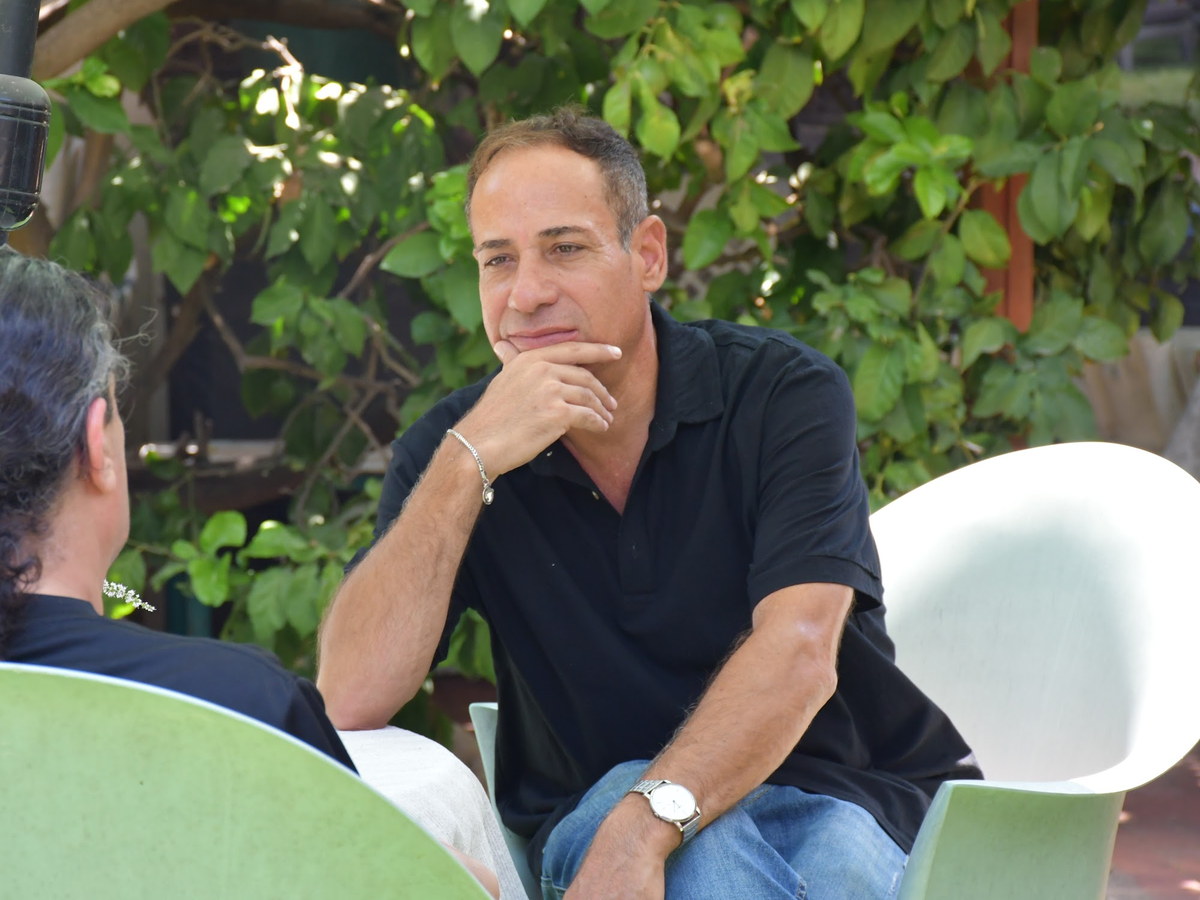
Alon Shemesh is an emotional therapist and personal development coach, a graduate of the Tut Tikshoret school and holder of an NLP Master certificate. Sessions take place at the clinic in Rehovot or on Zoom from anywhere, at a pace that suits you.
Every process is built around what you bring into the room, not around a ready-made template. The first step is a short intro call, with no commitment.
Get to know meYou don't need to know how to change a pattern. You can start with the question: which pattern keeps repeating for you, and what would you like to feel different? A personal intro call, with no commitment.
To be clear: the guidance and emotional therapy offered by Alon Shemesh are not a substitute for psychological or psychiatric treatment. Alon is not a psychologist or a psychiatrist, and some situations require diagnosis or treatment by a mental health professional - in such cases you will be referred to the appropriate professional.
Before you go - have you heard about the December 1 seminar?
Alon will get back to you soon to confirm your place and share payment details. If it's urgent, you can also WhatsApp 054-3333265.