In your career, your relationship, your parents' home or your routine: feeling stuck is a sign that the old way no longer works. Together we'll understand what is really keeping you in place, define where you want to go, and start moving step by step.

There's a morning when you wake up and realize another month has gone by, maybe another year, and nothing meaningful has changed. The same job, the same routine, the same conversations. No disaster happened, but nothing really moved either.
Feeling stuck is confusing, because from the outside everything looks fine. There's a job, a roof over your head, people around you. And still there's a quiet heaviness: a feeling that you're living the same day over and over, that time is slipping away, and that you're not quite where you wanted to be.
Most people who come to this process aren't in a dramatic crisis. They are fully functioning people who have simply reached the point where they ask themselves: how long is this going to go on like this?
The good news is that feeling stuck never really means you are stuck. It means something about the old way no longer fits the person you are today, and that it's time to look at what needs to change so you can move forward again.
Did you nod at least once? That's already a good sign, because recognizing the feeling is the first step out. An intro call commits you to nothing.
If knowing you need to change were enough, no one would stay stuck. But we all know this gap: we know exactly what isn't working, and still we keep doing exactly the same thing. Feeling stuck isn't about a lack of information. It's about what happens beneath the surface.
These are the things that usually keep people stuck:
That's why in this process we don't settle for the question "what do you want to change". The more important question is what makes you stay exactly where you are. That's where the real starting point is, and that's where tools from the world of NLP come in, tools that can identify the pattern and the belief holding you, and take them apart.
This may be the most uncomfortable question in the process, and it's also the most freeing. As long as being stuck feels like something that happened to us from the outside, we have no control over it. The moment we start to see how we, without meaning to, hold it in place, the ability to let go begins too.
In psychology this is called locus of control. A person with an external locus of control feels that life is dictated by circumstances: the boss, the partner, luck, the times. They wait for something outside to change so they can move, and so they usually keep waiting. A person with an internal locus of control knows they don't control everything that happens, but they are responsible for their response and their direction, so even when things are hard, they have somewhere to start.
A central part of the process is bringing the locus of control back inside. Not to load you with blame for everything that hasn't moved until now, but exactly the opposite: to give you back the feeling that you have a hand in what happens, and that you're allowed to start moving without waiting for approval from outside.
There's no single formula for every kind of stuck, but there is an organized way of working. These are the main tools in the process, adapted to what you bring.
Before you start moving, we understand exactly where you're stuck and in what. Often it turns out that the general feeling of "I'm stuck" is made up of several specific points, and once they're identified, each one can be addressed separately.
This is the heart of the work. We'll look for the limiting belief, the fear and the hidden payoff that keep you exactly where you are, because without seeing them, every attempt to change runs into an invisible wall.
"I want something different" isn't a goal. We'll translate the vague feeling into a clear picture of where you want to go, because when the mind knows where it's heading, it stops running in place and starts looking for the way.
Being stuck feels like an impassable wall because you're looking at the whole road at once. We'll break it into small, doable steps, ones you can start this week, because real movement is built one step at a time.
Sometimes what holds you sits somewhere that's hard to reach with words. Tools from the world of NLP, inspiration cards and guided imagery bypass the noise in your head and let you see the stuck place, and the way out of it, from a new angle.
Even when it's clear where you want to go, fear of the unknown can stop you. We'll get to know that fear, understand what it's really trying to protect, and move forward without waiting for it to disappear, because it almost never disappears on its own.
Sometimes the simplest way to understand what you're looking for is to see the gap between the sentence you come into the process with and the sentence you want to leave it with.
"I know something needs to change, but I'm not moving"
I take the first step, even when it's small
"I'm stuck in a job that no longer fulfills me"
I know what I want, and I'm building a way to get there
"Life is happening to me, and I'm just being dragged along"
I take the wheel and choose where to go
"I've been planning a change for a year and haven't started"
I turn intentions into steps I actually take
"The same pattern keeps coming back for me"
I recognize the autopilot and choose a different response
"I have a dream I no longer believe in"
I take a first step toward what matters to me
Change doesn't happen in a day. It happens when you start recognizing what stops you in real time, and practicing a different way to move, again and again, until movement becomes natural.
This is a very common thought, and it's completely understandable. You've read, you've thought, maybe you've even figured out what the problem is. So why is nothing moving yet?
Because knowing you need to move and actually managing to move are two completely different things. When we're inside the stuck place, it's almost impossible to see it from the outside. We go around the same tracks of thought, return to the same familiar excuses, and can't find the thread to start pulling. It isn't a lack of ability, it's simply the point of view.
And notice something interesting: when the car breaks down by the side of the road, we call a tow truck without a second thought. But when we ourselves are stuck in life, we expect ourselves to tow ourselves out, and usually turn to friends rather than to someone for whom this is their profession.
Personal coaching doesn't replace your strength. It creates a place to stop, take a focused look at what's stuck, and above all turn understanding into a real first step in your actual life.
Stuck in an unfulfilling job, unsure whether to leave, change direction or dare to start something new
A relationship that's going nowhere, or a long stretch of being single that feels like a wall that won't move
Leaving your parents' home, heading toward independence, or after a breakup, a move or a big change
Anyone who feels that life keeps repeating itself and wants to finally start moving forward
Feeling stuck is the sense that you are standing still while life keeps moving. Nothing bad is necessarily happening, but nothing is really moving either: the same job that stopped being fulfilling long ago, the same relationship that is going nowhere, the same routine on repeat. It isn't depression and it isn't laziness. It's a sign that the path that suited you in the past no longer serves you today, and that it's time to look at what needs to change.
A phase passes on its own when circumstances change. Feeling stuck stays even when circumstances shift, because what keeps you in place is inside, not outside. A good sign is that the thought "I have to change something" has been coming back for months, but no real step has been taken. If that resonates, it's probably more than a phase.
It depends on how deep the stuck feeling goes and what is holding you in it. The first sense of movement usually comes within the first few sessions, because the moment you identify what is really stopping you, something loosens. Change that lasts takes practice in real life. In the intro call we set realistic expectations together, with no pressure and no commitment.
That's exactly what it's for. Feeling stuck in your career is one of the most common forms, and usually what's stuck isn't the decision but the fear around it: fear of financial insecurity, of making a mistake, or of what people will say. We won't rush to decide for you whether to leave or stay. First we'll understand what is holding you, and from there you can choose out of clarity rather than fear.
A very close one. Beneath almost every stuck feeling sits a familiar pattern that keeps repeating, and a quiet belief that holds it in place: "I have no choice", "It's too late for me", "If I change, I'll disappoint someone". As long as that belief is working beneath the surface, every attempt to change runs into an invisible wall. A central part of the work is identifying the pattern and the belief, and replacing them with something that lets you move. More on changing patterns.
Because most of the time you tried to change the behavior without touching what produces it. Resolutions, lists and motivation last a few days, and then the old pattern returns, because its root is still in place. In this process we don't work on "trying harder", but on what keeps you stuck in the first place. When that changes, movement comes without fighting yourself.
Yes. Feeling stuck doesn't stay at work. It shows up in a relationship that's going nowhere, in a long stretch of being single that feels like a wall, in the move from your parents' home to an independent life, or in a general sense that life is happening to you instead of you leading it. The tools are the same, and they're adapted to what you bring into the room.
Both. Sessions take place at the clinic at 51 Dubnov St. in Rehovot, and those who live far away meet on Zoom with exactly the same depth. You can also combine the two, depending on what works with your schedule.
Often we wait for the moment when everything will be clear. When we'll know exactly where to go, what to change and how it will end. But that kind of clarity almost never comes before movement. It actually forms along the way.
The goal of the process isn't to promise you'll never make a mistake, or to paint a perfect life. It's to help you understand what is holding you in place, and to give you back the feeling that you can move again, at your own pace and in the direction that's right for you.
If you feel it's time to leave this place, you can start with one conversation, and figure out together what's really stopping you and how to start moving.
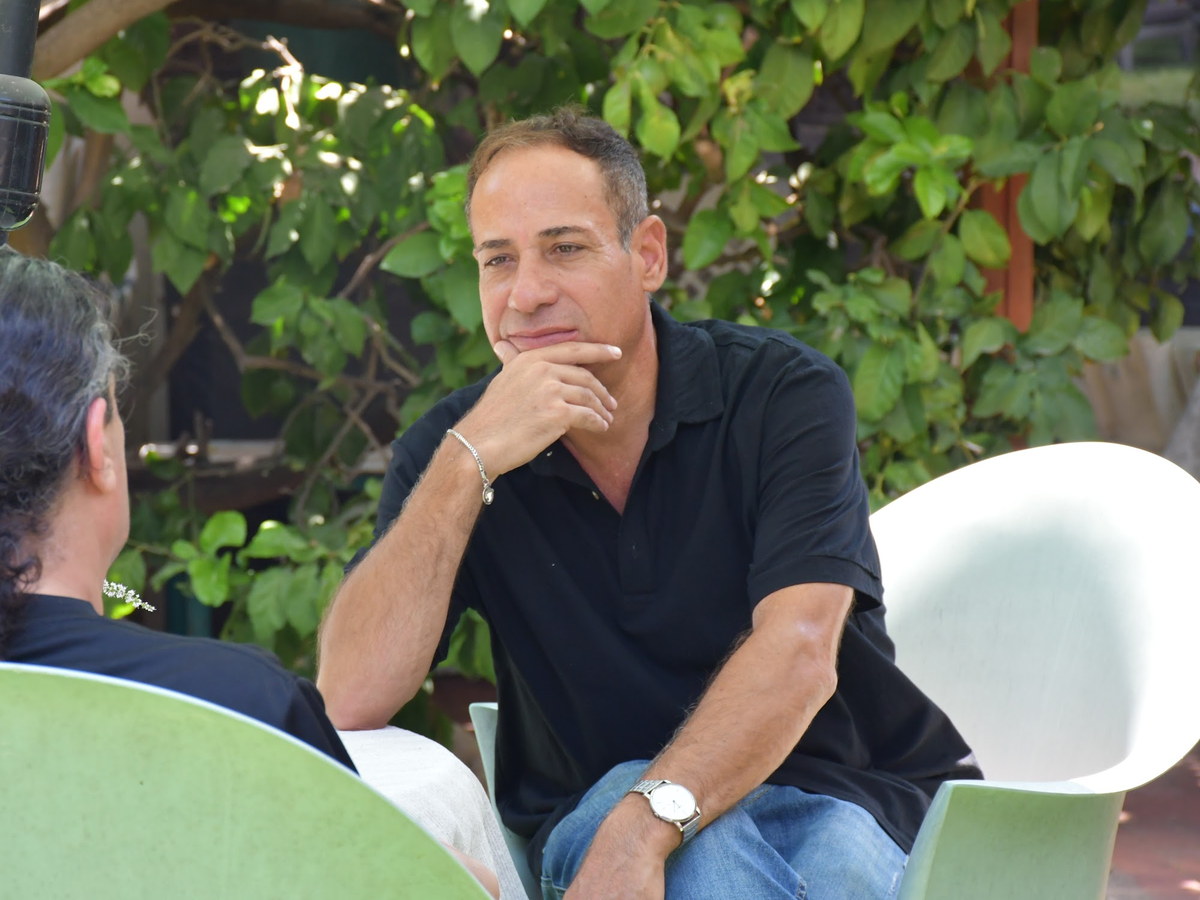
Alon Shemesh is an emotional therapist and personal development coach, a graduate of the Tut Tikshoret school and holder of an NLP Master certificate. Sessions take place at the clinic in Rehovot or on Zoom from anywhere, at a pace that suits you.
Every process is built around what you bring into the room, not around a ready-made template. The first step is a short intro call, with no commitment.
Get to know meYou don't need to know exactly where yet. You can start with the question: where do you feel stuck, and what would you like to feel different? A personal intro call, with no commitment.
To be clear: the guidance and emotional therapy offered by Alon Shemesh are not a substitute for psychological or psychiatric treatment. Alon is not a psychologist or a psychiatrist, and some situations require diagnosis or treatment by a mental health professional - in such cases you will be referred to the appropriate professional.
Before you go - have you heard about the December 1 seminar?
Alon will get back to you soon to confirm your place and share payment details. If it's urgent, you can also WhatsApp 054-3333265.