You want to share your opinion in a meeting, but you're afraid people will think you're wrong. You find it hard to say "no" even when something doesn't suit you, or you compare your achievements to other people's. Sometimes you know exactly what you want, but when the moment comes, self-doubt stops you.

Low self-confidence in adults isn't necessarily something you can see from the outside. You can be successful, run a family, hold a senior position and look sure of yourself, and still feel that you're not good enough.
When these feelings affect your choices, your relationships and your everyday life, therapy for low self-confidence can help you identify the thought patterns that hold you back, strengthen your self-worth and develop new ways of handling situations that bring up doubt and fear.
Alon Shemesh's emotional support offers a personal, attentive space where you can understand what lies behind the lack of confidence and work gradually toward change.
Low self-confidence doesn't only show up as shyness. Sometimes it appears precisely in sociable, responsible, successful people who feel they have to prove themselves again and again. The signs can show up in different areas of life.
Difficulty voicing an opinion, asking for a raise, taking on responsibility or handling criticism.
A constant need for approval, fear of rejection and a tendency to give up your own needs to keep the relationship going.
Comparing yourself to others, feeling inferior or worrying about embarrassing yourself.
Long deliberations, fear of getting it wrong and difficulty trusting your own judgment.
Difficulty saying "no", people-pleasing and feeling guilty when you choose yourself.
Excessive self-criticism, a feeling that you're not good enough and difficulty acknowledging your successes.
When these patterns repeat over time, they can narrow your sense of freedom and lead you to pass up opportunities you would have liked to take.
Many people believe self-confidence should grow naturally with age and experience. But sometimes it is precisely the experiences gathered over the years that keep shaping the way we see ourselves.
The way we were treated as children can affect how we value ourselves. Repeated criticism, very high expectations or a lack of positive encouragement can contribute to a feeling that you have to work hard to deserve appreciation.
Being shunned, rejected, humiliated or experiencing significant failures can leave a mark well into adulthood. Sometimes a person keeps fearing criticism or rejection even when their current reality is different from what they went through in the past.
In a world where we are exposed nonstop to other people's successes, it's easy to focus on what we lack. Repeated comparison can deepen a sense of inferiority and weaken self-esteem.
Thoughts like "I'm not good enough", "everyone is more successful than me" or "if I make a mistake, they'll think I'm a failure" can, over time, become automatic thought patterns.
Although they are connected, they are not quite the same thing.
Self-confidence refers to our belief in our ability to handle tasks, decisions and different situations. A person can feel very confident professionally, yet feel insecure in a relationship or in social situations.
Self-image refers to the way we perceive and value ourselves. Low self-esteem in adults can show up as an ongoing sense of worthlessness, self-criticism and difficulty acknowledging strengths and successes.
So improving self-confidence isn't just about learning to look more confident on the outside. It's also important to address how a person talks to themselves, values their abilities and deals with mistakes.
Self-confidence isn't a trait you're either born with or without. It's shaped by experiences, beliefs and what you go through in life, so it can be developed in adulthood too.
One of the important stages in the process is changing patterns that reinforce the lack of confidence. For example, someone who regularly avoids voicing an opinion out of fear of criticism never gives themselves the chance to discover that they can handle disagreement too. By identifying the thoughts that trigger the avoidance and gradually practicing new responses, a sense of capability can develop.
Another significant element is setting boundaries. People with low self-confidence may find it hard to turn down requests, express their needs or stand their ground for fear of hurting others. Learning to set healthy boundaries lets a person recognize that their own wishes, feelings and needs have a place too. It doesn't require confrontation or distancing yourself from people, just clearer and more respectful communication.
Work on empowerment and personal growth usually goes hand in hand with building confidence: the more we reconnect with our own wishes and abilities, the easier it becomes to act from self-worth rather than from fear.
Improving self-confidence is a gradual process, not a change that happens overnight. Sometimes it's small, consistent steps that allow you to build a more stable sense of confidence.
Emotional support with Alon Shemesh combines personal conversation, listening and tools from the world of NLP, alongside guided imagery and work with limiting beliefs. At the start of the process, you identify the situations where the lack of confidence appears, the thoughts that come up and the behavior patterns that keep reinforcing it.
Later on, you can work on changing thought patterns, strengthening your personal resources and practicing new ways of responding to challenging situations. Guided imagery can help with practicing relaxation and preparing mentally for situations that cause worry, and NLP tools are woven into the work on your inner voice, your personal interpretations and identifying beliefs that limit your sense of capability.
We all have moments of insecurity, especially when facing new situations. But when the fear of criticism, the need for approval or the feeling that you're not good enough stays with you over time, it's worth considering getting support.
Support for building self-confidence may be a good fit when the difficulty makes you avoid opportunities, settle in relationships, struggle to set boundaries or live with a constant feeling that you have to prove yourself. Sometimes it appears together with difficulty making decisions, when self-doubt makes it hard to trust your own judgment.
There's no need to wait until low confidence affects every area of your life. Sometimes the very decision to look at the patterns holding you back is the beginning of change.
Self-confidence doesn't mean being sure of every decision or succeeding at everything. It also shows up in the ability to recognize your worth, deal with mistakes and keep going without letting fear run your choices. Alon Shemesh offers personal emotional support for women and men dealing with low self-confidence, self-criticism and poor self-image, combining NLP, guided imagery and work on thought patterns. The process takes place in a respectful, non-judgmental atmosphere, at the clinic in Rehovot or on Zoom, and is tailored to your needs and personal pace.
Yes. Self-confidence is not an inborn trait but the result of experiences, beliefs and things we have lived through, so it can be developed at any age. Even patterns that have been with us for years are not necessarily fixed - you can learn to recognize them and practice new ways of thinking and responding.
Low self-confidence can stem from childhood experiences and a critical family environment, from social rejection or significant failures, from constantly comparing yourself to others, and from limiting beliefs such as "I'm not good enough". Sometimes it is precisely the experiences gathered over the years that keep shaping the way we see ourselves.
Self-confidence refers to the belief in your ability to handle tasks and situations, and you can feel confident in one area and unsure in another. Self-image refers to the way we perceive and value ourselves overall, and low self-esteem shows up as an ongoing sense of worthlessness and self-criticism. That is why building confidence also works on your inner voice, not only on how you act outwardly.
Improving self-confidence is a gradual process, not a change that happens overnight. There is no fixed number of sessions - progress is built from small, consistent steps and reviewed according to your personal pace and needs. Often it is small, accumulating successes that create a more stable sense of confidence.
We all have moments of doubt, but when the fear of criticism, the need for approval or the feeling that you're not good enough stays with you over time, makes you avoid opportunities, settle in relationships or struggle to set boundaries, it's worth considering support. There's no need to wait until low confidence affects every area of your life.
No. Low self-confidence doesn't only show up as shyness, and sometimes it appears in sociable, responsible, successful people who feel they have to prove themselves again and again. You can run a family, hold a senior position and look confident, and still feel inside that you're not good enough.
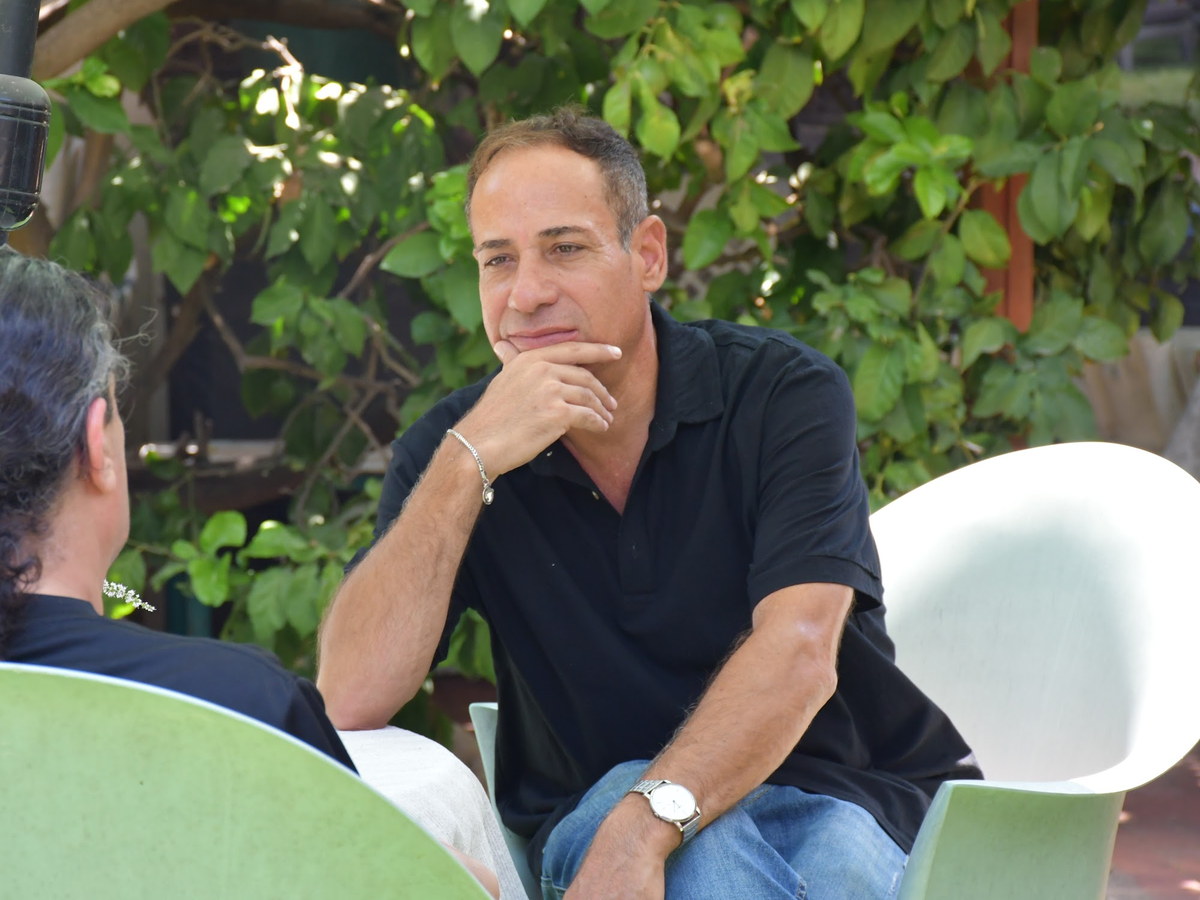
Alon Shemesh, an emotional therapist and personal development coach, holder of an NLP Master certificate and a graduate of the Tut Tikshoret school. Sessions take place at the clinic in Rehovot or on Zoom, depending on fit and need.
Every process is built around what you bring into the room, not around a ready-made template. The first step is a short intro call, with no commitment.
Get to know me Personal Coaching
The limiting beliefs that stop good employees from moving forward
The most talented person on the team didn't apply for the role, and it isn't skills they lack. What is really holding them back? Find out more
Read →
 Personal Coaching
Life looks good from the outside, so why does something inside still feel missing?
You have a job, a family and a routine, and still something is missing. 4 signs it's time to listen to yourself and begin a process of empowerment. Read more.
Read →
 Personal Coaching
When every decision might disappoint someone: how do we learn to choose ourselves too?
Afraid to choose because someone might be disappointed? 4 signs you decide for others, and how to choose yourself too. Read more.
Read →
At the clinic in Rehovot or on Zoom. A personal conversation, with no commitment - together we'll look at how you can start building confidence and self-worth.
To be clear: emotional therapy with Alon Shemesh is not a substitute for psychological or psychiatric treatment. Alon is not a psychologist or a psychiatrist, and some situations require diagnosis or a different professional response - in such cases, a referral to the appropriate professional will be considered.