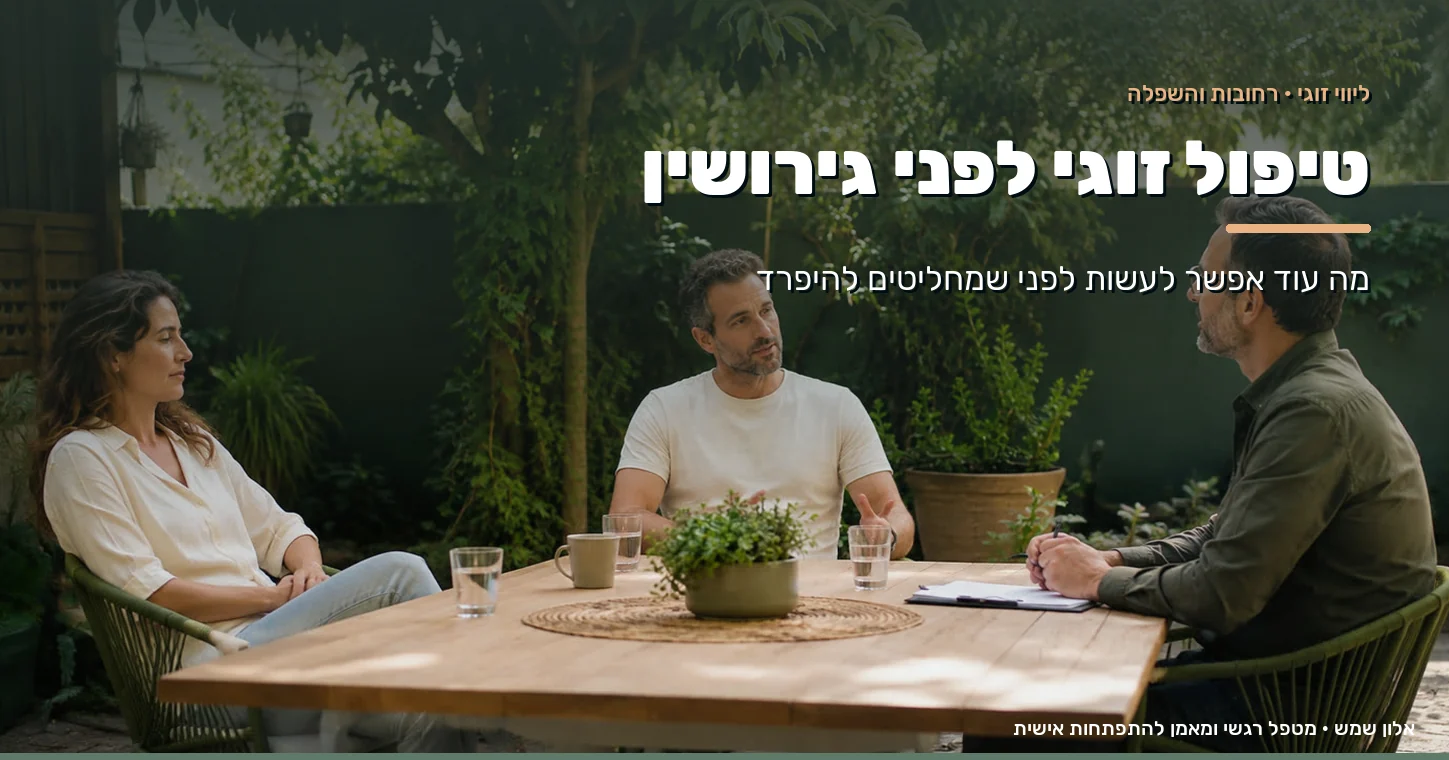

You said it in the living room, maybe after another evening that ended in silence. Maybe after a fight you've already had dozens of times:
"Maybe we should go to couples therapy."
And the answer came right away.
"I don't need therapy."
"I have nothing to say to a stranger."
"It won't help us."
Or simply: "No."
Sometimes that response hurts more than the fight itself. Because if you're the one who suggested therapy, it's very easy to feel you're also the only one trying to save the relationship.
But it's worth pausing here.
When your partner refuses couples therapy, it doesn't necessarily mean they've given up on the relationship. Sometimes they're refusing what the word "therapy" represents to them: an admission that something is wrong, fear of being blamed, worry about opening up in front of a stranger, or even the belief that going to therapy means the relationship is already on its way to a breakup.
And the important question isn't only how to get them to say yes.
The question is: what can you do now, even while the other side is still saying no?
Your partner doesn't want couples therapy, but what are they really rejecting?
Two people can hear the sentence "let's go to couples therapy" and take completely different things from it.
You may be saying:
"Our relationship matters to me and I want things to be better for us."
And the other side hears:
"You're the problem and I'm taking you to someone who will explain that to you."
From here it's easy to see why trying to persuade by force usually doesn't help. The more you push, the more the other side may dig in.
Instead of arguing about therapy itself, it's worth trying to understand what lies beneath the refusal.
"If we need therapy, our relationship must be in terrible shape"
For some people, couples therapy is the last stop before a breakup. So the very suggestion can sound threatening.
But couples therapy isn't only for couples on the verge of falling apart. Couples also reach out because of burnout, distance, communication difficulties, recurring arguments, or simply a feeling that a relationship that was once close has turned mostly into managing a home, work and kids.

"You want someone to say it's my fault"
This is one of the most common fears around couples therapy.
No one wants to walk into a room where they feel like the defendant and the other two are the prosecution.
So sometimes a small change in the way you suggest therapy can make a big difference. Instead of:
"We need therapy because it's impossible to talk to you",
you can say:
"I feel like we keep getting stuck in the same places, and I'd like us to find a different way to deal with them."
The first looks for someone to blame. The second describes a shared problem.
"I don't want to talk about my stuff in front of a stranger"
Opening up isn't easy for everyone.
Some people can talk for hours with their partner, but the moment they picture a clinic and a therapist, something shuts down.
That worry is legitimate. So sometimes the first step isn't to persuade, but to ask: what exactly scares you about the idea?
The answer may be very different from what you thought.
Can you start couples therapy on your own?
This is one of the questions I hear from people who come to me because of difficulties in their relationship.
The answer is that you can absolutely start a process even when your partner isn't ready to join yet, but it's important to understand that this isn't couples therapy in the classic sense.
It's a personal process that focuses on you within the relationship.
Because a relationship is made of two people, but each of them brings their own patterns, reactions, fears and beliefs into it.
Imagine a dance that two people already know by heart.
One moves closer, the other pulls away.
One raises their voice, the other goes silent.
One demands an answer now, the other shuts down even more.
After years, no one remembers who started. They just know how the dance goes on.
And here is an important point: even if you can't control the reaction of the person in front of you, you can start to recognize your own part in the pattern.
- What happens to you just before you blow up?
- What do you read into it when she goes quiet?
- Why does that particular sentence of his set you off so much?
- What do you do when you feel unseen?
- And what do you really need in that moment, beneath the anger?
When you start working on these questions, the goal isn't to learn "how to fix your partner".
The goal is to stop running on autopilot.
Sometimes the fight is just the tip of the iceberg
I like to use the image of an iceberg.

Above the surface are the things people fight about:
The dishes in the sink.
Who picks up the kids.
Why you came home late again.
Why you're always on your phone.
Why there's no intimacy between us anymore.
But beneath the surface there may be completely different things.
"I feel like I'm not important to you."
"I'm afraid you'll leave me."
"I feel alone inside this relationship."
"I'm afraid that if I say what I really need, I'll be rejected."
And when you don't talk about what's down below, you keep arguing about what's up above.
In my work with couples and individuals, I try to reach exactly these places, not to look for someone to blame, but to identify the patterns that run us and start creating a different choice.
In the process I combine conversation and practical work with tools from the worlds of NLP, guided imagery and inspiration cards. Not every tool suits every person, and not every couple needs the same process. The goal is to fit the work to the people sitting in front of me and to the reality they live in.
7 Keys to Love and a Healthy Relationship: a seminar for couples and singles
If you recognize yourself in what you've read here, there's also another way to start, without committing right away to a therapy process.
On December 1, 2026, Miri Drori and I will hold the "7 Keys to Love and a Healthy Relationship" workshop in Rehovot, a three-hour experiential seminar for both couples and singles.
We built the evening around a question that is simple, yet not simple at all:
How do you create a good relationship, and how do you protect it even when life itself gets in the way?
During the seminar we'll go through seven keys that touch exactly the places where a relationship is built, worn down and sometimes also able to begin to change:
The mirror and self-love, because it's hard to build a healthy relationship when our self-worth depends entirely on the person in front of us.
Empowering and limiting beliefs, recognizing the sentences and beliefs we bring with us into the relationship, sometimes without knowing they're there.
The seminar includes live practice, guided imagery and inspiration cards.
And it's also suited to anyone who is in exactly the place we talked about in this article: you want to do something for the relationship, but your partner isn't ready to come to therapy yet.
You don't have to come as a couple to start understanding yourself better within a relationship.
Want to join? Seminar details and registration
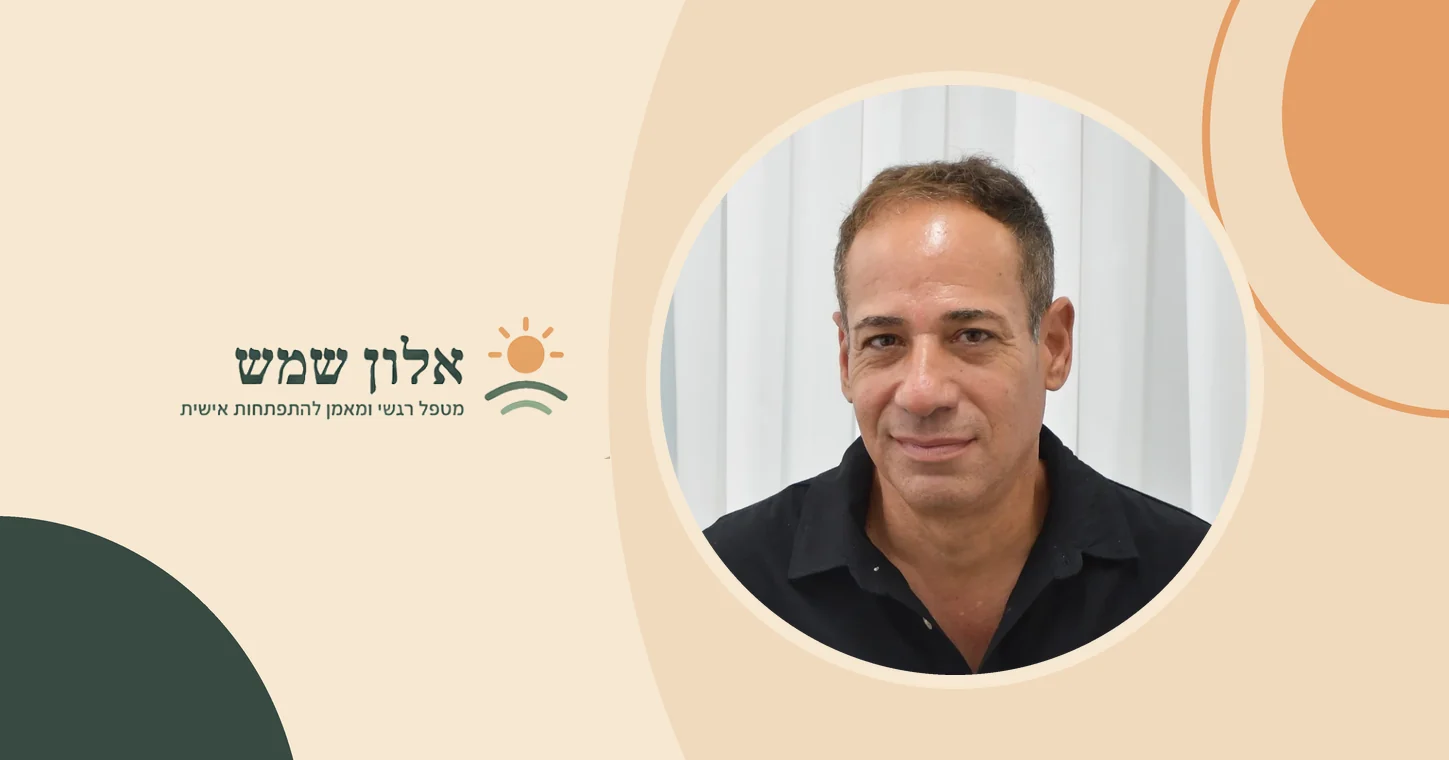
I'm Alon Shemesh, an emotional therapist and personal development coach, and I guide couples and individuals who want to understand the patterns that run them, improve their communication and create practical change in the way they show up in a relationship.
You can start with an intro call, with personal growth guidance or with a couples process, and you can also meet Miri Drori and me at the "7 Keys to Love and a Healthy Relationship" seminar on December 1, 2026 in Rehovot.
Because even when you can't decide for the person in front of you,
you can still decide what you do with your side of the relationship.