

We live in a time when artificial intelligence is becoming an inseparable part of everyday life. It helps us write messages, make decisions, find answers and even hold personal conversations. Technology lets us be connected almost every moment, but does it also help us feel closer to one another?
Precisely in an age when digital communication is so available, it's important to develop social resilience: the ability to form meaningful connections, cope with rejection and criticism, keep a sense of belonging and feel secure in ourselves even in challenging social situations.
When technology replaces part of human communication
In the past, to get advice, share a difficulty or receive support, we would usually turn to a friend, a family member or someone close. Today you can get an instant response from an AI system, with no fear of criticism or of being misunderstood.
This has many advantages, but also a challenge. When we get used to communication in which the other side is always available, patient and responds according to our expectations, a real human encounter can feel more complicated.
Relationships involve disagreements, silences, disappointments and the need to compromise. It is precisely coping with these situations that allows us to develop social skills, empathy and confidence in our connections with others.
What is social resilience, and why does it matter especially today?
Social resilience isn't measured by how many friends we have or how many reactions we get on social media. It shows in the ability to feel we belong, to express ourselves, to set boundaries and to maintain meaningful connections even in challenging times.
A socially resilient person isn't immune to loneliness, rejection or disappointment. The difference is in their ability to cope with these experiences without losing their sense of self-worth.
In a world where social comparison, digital communication and AI-generated content shape the way we see ourselves and others, the ability to stay connected to our own identity is especially important.
How do you strengthen social resilience in a rapidly changing world?
Social resilience is an ability you can develop and strengthen throughout life. You don't have to make big changes to get started.
- Make room for human encounters: a face-to-face conversation, meeting friends or a shared activity let us practice listening, empathy and real communication.
- Cope with social discomfort: not every conversation will go well and not everyone will agree with us. The ability to handle embarrassment, criticism or rejection is part of building self-confidence.
- Strengthen your sense of self-worth: it's important to learn to value ourselves even without outside approval, reactions on social media or comparison to other people's successes.
- Use technology as a tool, not a substitute: AI can help with thinking and getting organized, but it's worth keeping room for personal conversations, for consulting people close to you and for human support.
Personal empowerment as a foundation for social resilience
Sometimes the difficulty in forming social connections doesn't come from a lack of opportunities, but from inner patterns such as fear of rejection, low self-confidence, difficulty setting boundaries or a constant need for approval from those around us.
A process of empowerment and personal growth can help identify these patterns, strengthen a sense of capability and develop new ways of coping with social situations.
Full information on personal empowerment →
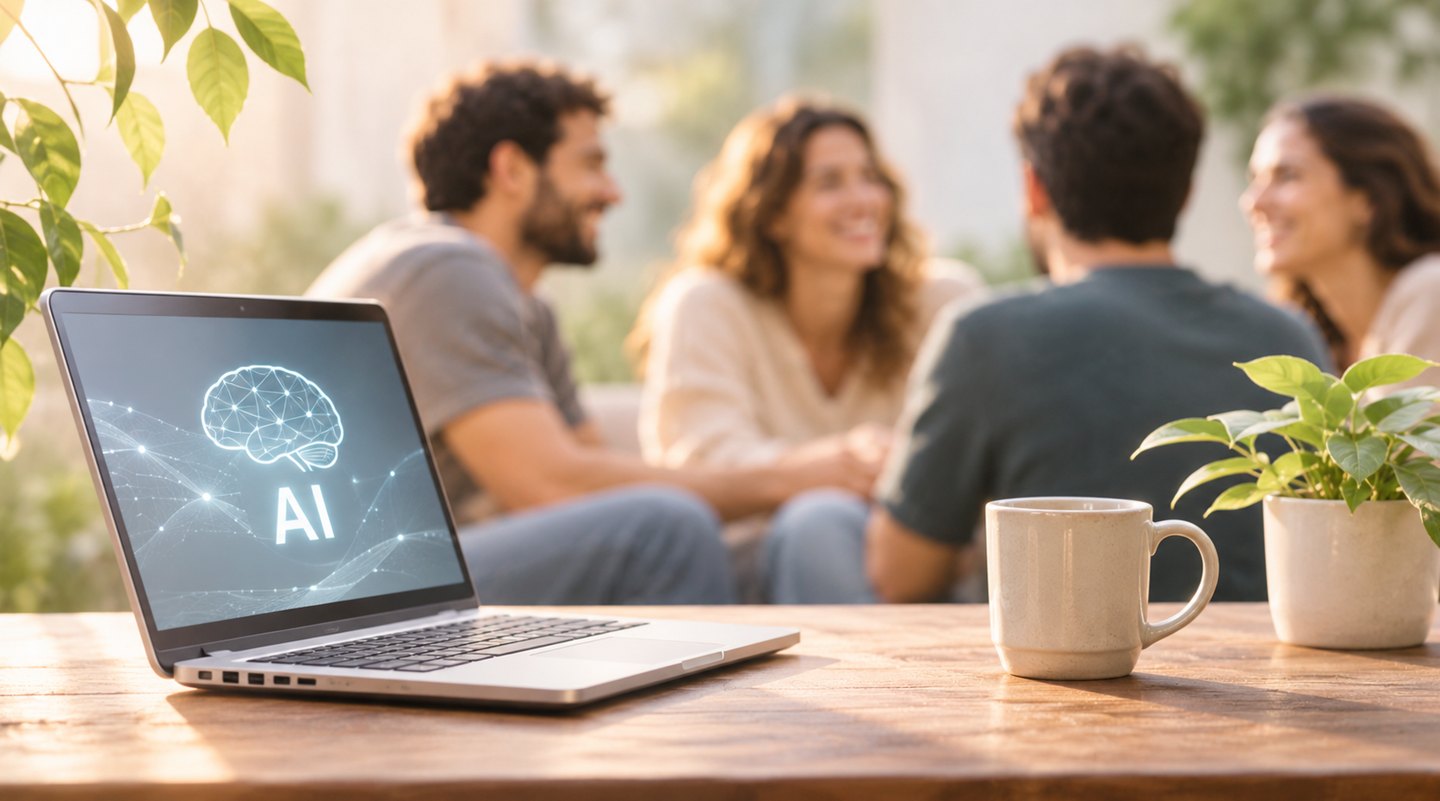
Technology advances, but the need for human connection remains
Artificial intelligence will keep developing and shaping the way we work, communicate and run our lives. Alongside its advantages, it's important to remember that the ability to form connections, feel we belong and trust ourselves also rests on real human experiences.
In therapy at the Nefeshlava clinic, led by Alon Shemesh, you can work on strengthening self-confidence, identifying patterns that hold you back and developing tools for coping with emotional and social challenges.
Because in a world where technology can do more and more, our ability to stay connected to ourselves and to the people around us remains more meaningful than ever.