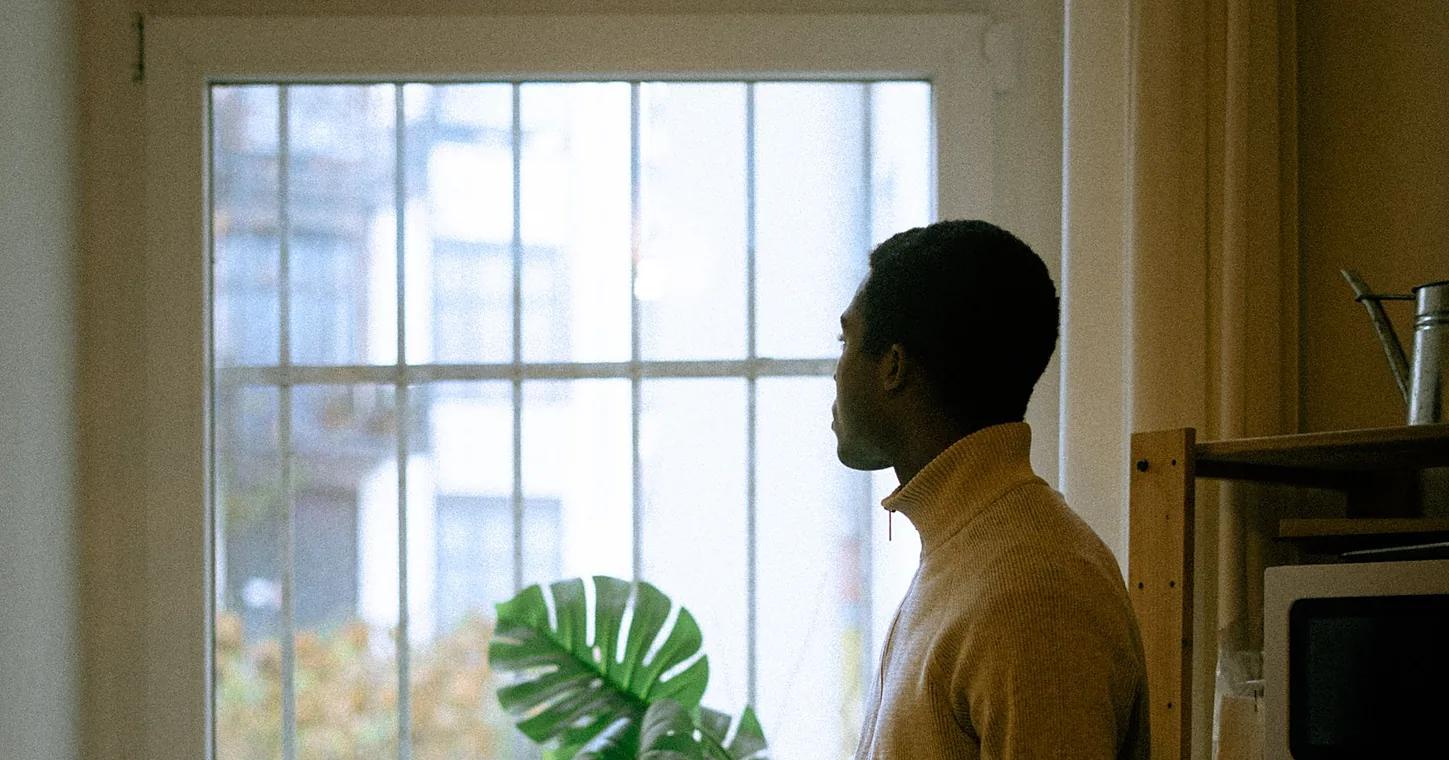
All day long, you somehow managed to keep your head above water.
There were things to do, people to talk to, a screen to look at. The load was there, but it didn't take over.
And then night comes.
The lights go out, the house is quiet, your head meets the pillow, and at that exact moment your mind decides to wake up.
Thoughts you didn't ask for start racing. A conversation from work that replays again and again. Worry about tomorrow. "Did I lock the door?", "What did I say back there?", "What if?".
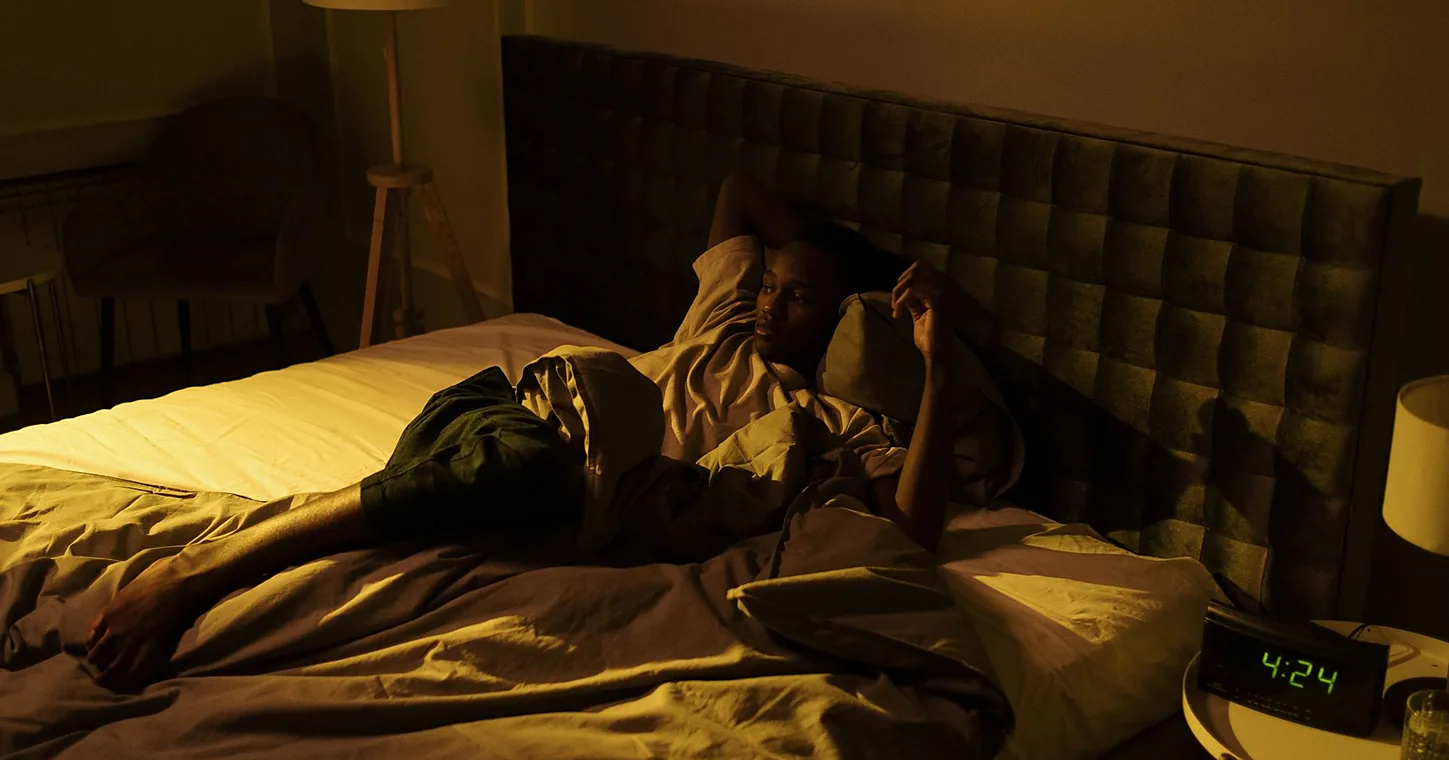
Your body is tired, but your head is at peak activity. And sometimes, even after you fall asleep, there's the 3 AM wake-up, with the same restlessness you can't explain.
If this sounds familiar, you are far from alone. Night anxiety is one of the most common complaints, and it is almost never "just thoughts".
Why anxiety gets worse at night in particular
It feels unfair. After a long day, when you can finally rest, your mind speeds up instead.
But there is a logic to it.
During the day, the noise inside competes with a flood of stimuli. There are tasks, messages, lists. They don't solve the anxiety, but they cover it up, like background noise masking a faint sound.
At night the outside noise switches off, and for the first time since morning nothing distracts you.
What was there all day simply sounds louder now.
There's one more thing. When the body relaxes before sleep, the mind gets quiet, and in that quiet it tends to go back and scan for dangers and unresolved problems. It's an ancient, human response. The trouble is that at midnight it doesn't help us solve anything, only stay awake.
The loop that feeds itself
Night anxiety has a particularly frustrating quality: it feeds itself.
It starts with a little restlessness.
Then comes the worry about not sleeping itself: "If I don't fall asleep now, I'll be wrecked tomorrow."
That worry raises the tension.
The tension pushes sleep even further away.
And so, instead of tiredness winning, a loop forms in which the fear of not sleeping itself becomes what keeps you from sleeping.
The more we try to "force" ourselves to fall asleep, the more the effort itself heightens alertness. Sleep is one of the few things that slips further away the harder you chase it.
Treating the root, not just the nighttime symptom
It's easy to think the solution is simply to "calm your thoughts before bed".
Relaxation techniques, breathing and a steady evening routine really can help, and they matter. But often they deal with the wave, not the source.
Because night anxiety is often where anxiety that got no room during the day ends up.
So in my work I try to understand not only "how to fall asleep", but what is actually trying to surface at night, and where it comes from.
I'm Alon Shemesh, an emotional therapist and personal development coach, and I work with people whose anxiety wakes up just as the world quiets down. In one-on-one work I combine conversation with tools from NLP and guided imagery, to work directly with the subconscious, calm the inner alarm system and allow the body to relearn that night is a safe place.
That's the heart of the work in anxiety treatment: not fighting the thoughts, but turning down what sets them off in the first place.
When it's important to see a medical professional too
Alongside the emotional work, it's important to say it plainly: some situations also call for a medical evaluation.
If the anxiety at night comes with strong physical signs, if the lack of sleep goes on over time and affects how you function during the day, or if thoughts come up that frighten you, it's a good idea to also see a doctor or a mental health professional.
Emotional guidance and personal coaching are not a substitute for medical or psychiatric treatment, and they can go alongside it and complement it.
Questions I hear about night anxiety
Why does anxiety get worse at night in particular?
Mainly because there are no more distractions. During the day, outside noise covers up the noise inside, and at night, when everything is quiet, what was there all along simply sounds louder. On top of that, when the body relaxes, the mind tends to go back and scan unresolved worries.
When should you see a doctor?
If the lack of sleep goes on for a long time and affects how you function during the day, if strong physical symptoms appear, or if thoughts come up that worry you, it's important to consult a doctor or a mental health professional. This can be combined with emotional guidance.