
This article is written for women and men alike.
You're in love, planning a shared future, and maybe you've already chosen a venue and a date for the wedding. But have you talked about how you'll manage money, share responsibility at home or deal with disagreements?
Wedding preparations are full of decisions, excitement and anticipation of your life together. In the middle of all that, you don't always stop to talk about the questions that will stay with you long after the event is over.
Even couples who feel secure in their relationship may discover significant differences in expectations, habits and worldviews. These differences don't necessarily point to a problem in the relationship, but the way you deal with them can affect the quality of your bond over time.
The right pre-marriage couples therapy can help partners get to know each other's needs and expectations better, improve communication and build a shared foundation for the next chapter of their lives.
We love each other, so why don't we always agree?
At the beginning of a relationship it's relatively easy to focus on what you share: interests, attraction, dreams and plans for the future. But as the relationship moves forward, the differences come to light too.
One partner prefers to save money and the other loves to spend on experiences. One needs time alone and the other prefers to spend almost every free moment together.
These aren't necessarily signs of incompatibility. Each person comes into a relationship with habits, values and experiences gathered over the years. The difficulty begins when each assumes their own way is the obvious one, and expects their partner to see things exactly as they do.
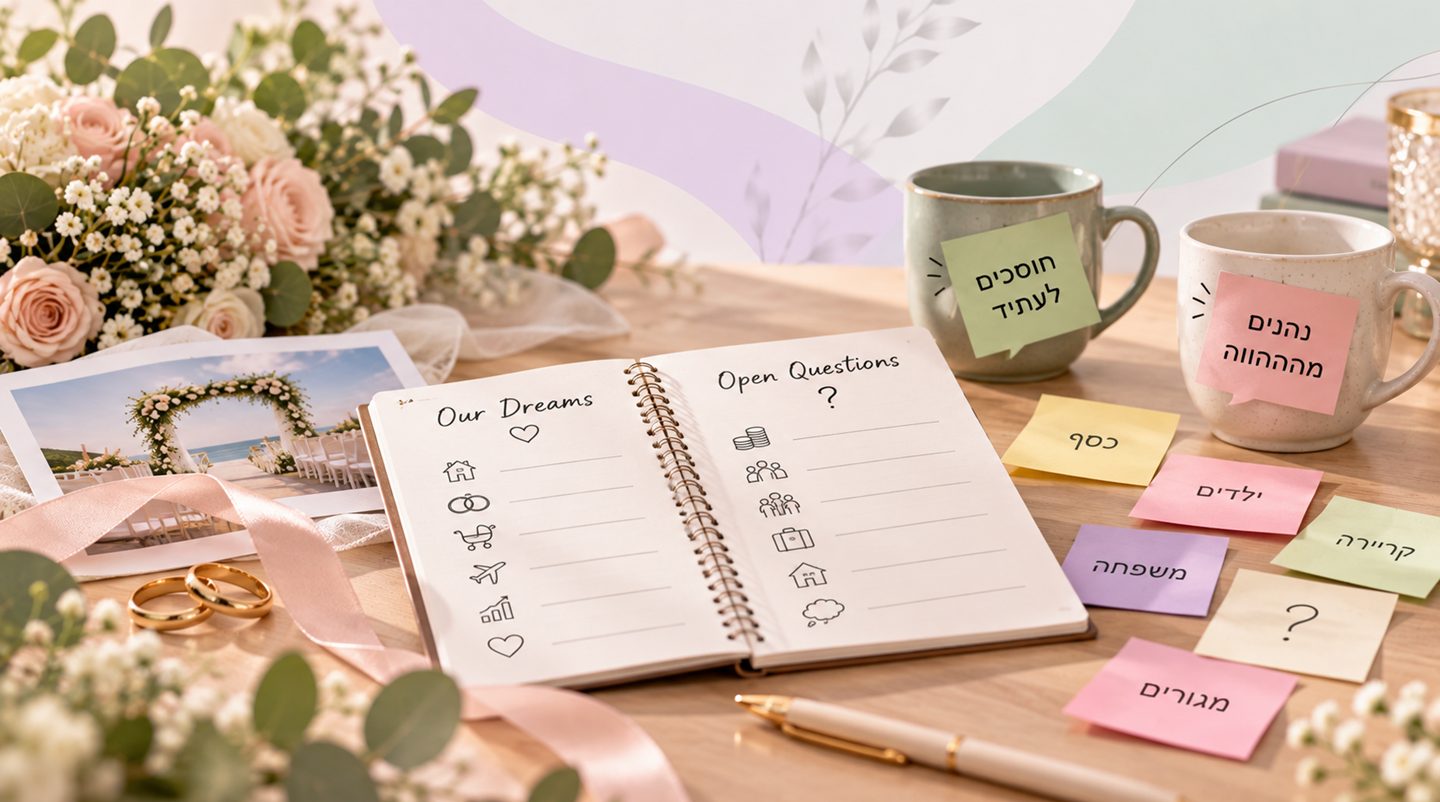
Five topics worth talking about before the wedding
Some conversations aren't always pleasant to start, but they can prevent misunderstandings and frustration down the road.
- Money and financial management: How will you plan a joint budget? What's your attitude toward saving, spending and financial commitments?
- Children and parenting: Do you both want children? What are your expectations about parenting, education and sharing responsibility?
- Families of origin: How much room will parents and extended family take up in your shared life? How will you handle interference or differing expectations?
- Career and personal ambitions: How do you support each other's professional growth, and what do you do when your needs clash?
- Sharing responsibility at home: Who is in charge of the everyday chores, and how do you create a division you both feel comfortable with?
The goal isn't to reach complete agreement on every question, but to understand where the gaps are and how you can deal with them together.
How do you resolve conflicts without turning every disagreement into a battle?
One of the most important skills at the start of a shared life is the ability to handle disagreements without turning them into a fight over who is right.
Resolving conflict in a relationship doesn't require one partner to always give in for the other. It requires a willingness to understand what lies behind each person's position and to look for solutions that take both people's needs into account.
Connecting communication can help with that. Instead of saying "You never consider what I want", you can explain: "It's important to me that we make big decisions together, because I want to feel there's room for my opinion".
Changing the wording doesn't guarantee agreement, but it can reduce defensiveness and allow a more open conversation.
Couples therapy before the wedding: do you have to wait for a crisis?
Many people associate couples therapy with bitter fights, emotional distance or a relationship in crisis. In practice, couples guidance can also help when the relationship is good and you want to make it stronger.
Couples therapy for young couples can focus on aligning expectations, identifying communication patterns and developing tools for dealing with change.
Couples therapy for an unmarried couple can also be relevant for couples moving in together, unsure about the future of the relationship, or wanting to build a stable foundation before a significant commitment.
It's important to understand that the goal isn't to prevent every crisis in the relationship. There's no way to know in advance what challenges life will put in front of you. The goal is to develop the ability to cope with difficulties, talk about sensitive topics and get through crises by working together.
In couples therapy you can examine communication patterns, understand each person's needs and practice new ways of handling disagreements.
Learn more about couples therapy before the wedding →

How do you build a strong emotional bond right from the start?
Strengthening an emotional bond doesn't depend only on romantic gestures or spending time together. It also grows through the sense of safety that lets you share, express difficulty and stay true to yourself within the relationship.
It's worth setting aside time for conversations that aren't only about wedding arrangements or everyday tasks. Ask what makes your partner happy, what worries them, and what each of you needs to feel loved and appreciated.
It's also important to remember that not every gap can be bridged. Sometimes these conversations bring up fundamental differences that call for a deeper look at your compatibility and at your wish to continue on a shared path.
Being able to talk about these things honestly, before the wedding, can actually help you make more conscious decisions.
Nefeshlava: starting your shared life with tools for your relationship
The wedding is a meaningful event, but a relationship keeps being built anew every day, through small decisions, conversations, challenges and shared moments.
At the Nefeshlava clinic, Alon Shemesh guides couples in a personal and attentive way using tools from the world of NLP, which focus on identifying thought patterns, interpretations and automatic reactions.
The process can help young couples examine their expectations, improve communication and develop ways of handling disagreements before they become a source of ongoing frustration.
On the Nefeshlava website, the home of emotional couples therapy, you can get to know Alon Shemesh's approach and the guidance options for the start of your shared path.
Because preparing for the wedding matters, but preparing for the life that comes after it matters just as much.